
Core Terminology in Layer Farming: A Guide Focused on Cage Farming Chickens

A few days ago, a classmate suddenly became interested in layer farming. Knowing I’ve been in the chicken business for years, she asked me to demystify it. While I have plenty of hands-on experience, explaining it with real professional clarity isn’t my strongest suit. So, I turned to AI for help. Here are the key terms Deepseek summarized for me. I’m sharing them with you all and welcome any corrections or additions.
The core terminology of layer farming mainly falls into the categories of flock management, performance evaluation, feeding techniques, and facility management. Below is a categorized list with explanations.
1. Flock Management & Production Performance 🐔
These terms describe flock status and measure production efficiency; they are the core of daily management, especially in cage farming chickens operations.
- Hen-Housed Egg Production: A key profitability indicator. The total number of eggs produced per hen from the time she is housed in the layer facility until she is culled.
- Lay Rate / Egg Production Percentage: The daily percentage of hens in a flock that lay an egg. (e.g., 90 eggs from 100 hens = 90% lay rate).
- Age at Sexual Maturity / Age at 50% Production: The average age (in days) when the flock reaches a 50% lay rate. A key measure of how early the pullets come into lay.
- Flock Uniformity / Body Weight Uniformity: The percentage of birds within a flock whose weight or body size falls within a specified range (e.g., ±10%) of the average standard. High uniformity indicates even development and good management, and is a strong predictor of future laying performance in cage farming chickens.
- All-In-All-Out (AIAO): A scientific rearing model. A single house contains birds of only one identical age, which are all moved out or culled simultaneously at the end of the cycle. This is crucial for breaking disease cycles between batches.
- Livability / Survival Rate: A measure of flock health, typically calculated for different phases (brooding, growing, laying).
2. Feeding Techniques 📊
These terms involve specific operational methods and management strategies during rearing.
- Phase Feeding: The practice of dividing the laying cycle into phases (e.g., pre-peak, peak, post-peak) and providing diets with different nutrient levels (especially protein and calcium) tailored to the age, production level, and physiological needs of the hens. This allows for precision nutrition and cost savings in cage farming chickens systems.
- Restricted Feeding: The deliberate reduction of feed quantity or nutrient density during the growing phase and late laying phase to control body weight and maintain reproductive performance.
- Stocking Density: The number of birds housed per unit of floor area (birds/m²). Excessive density severely impacts bird health and performance. Requirements differ for brooding, growing, and laying phases.
3. Facilities & Housing Systems 🏠
Terminology related to modern farming facilities is increasingly important with the development of large-scale production.
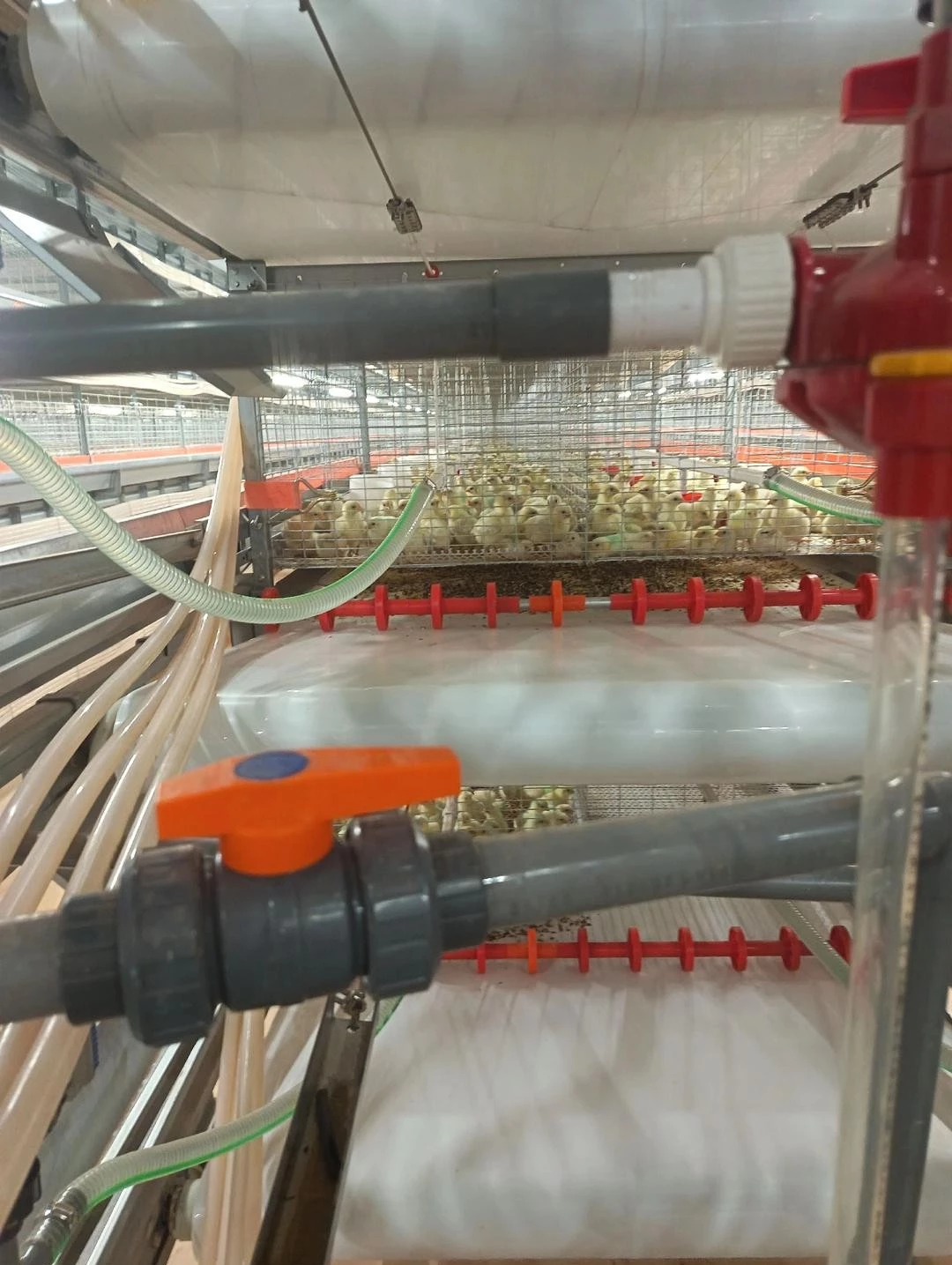
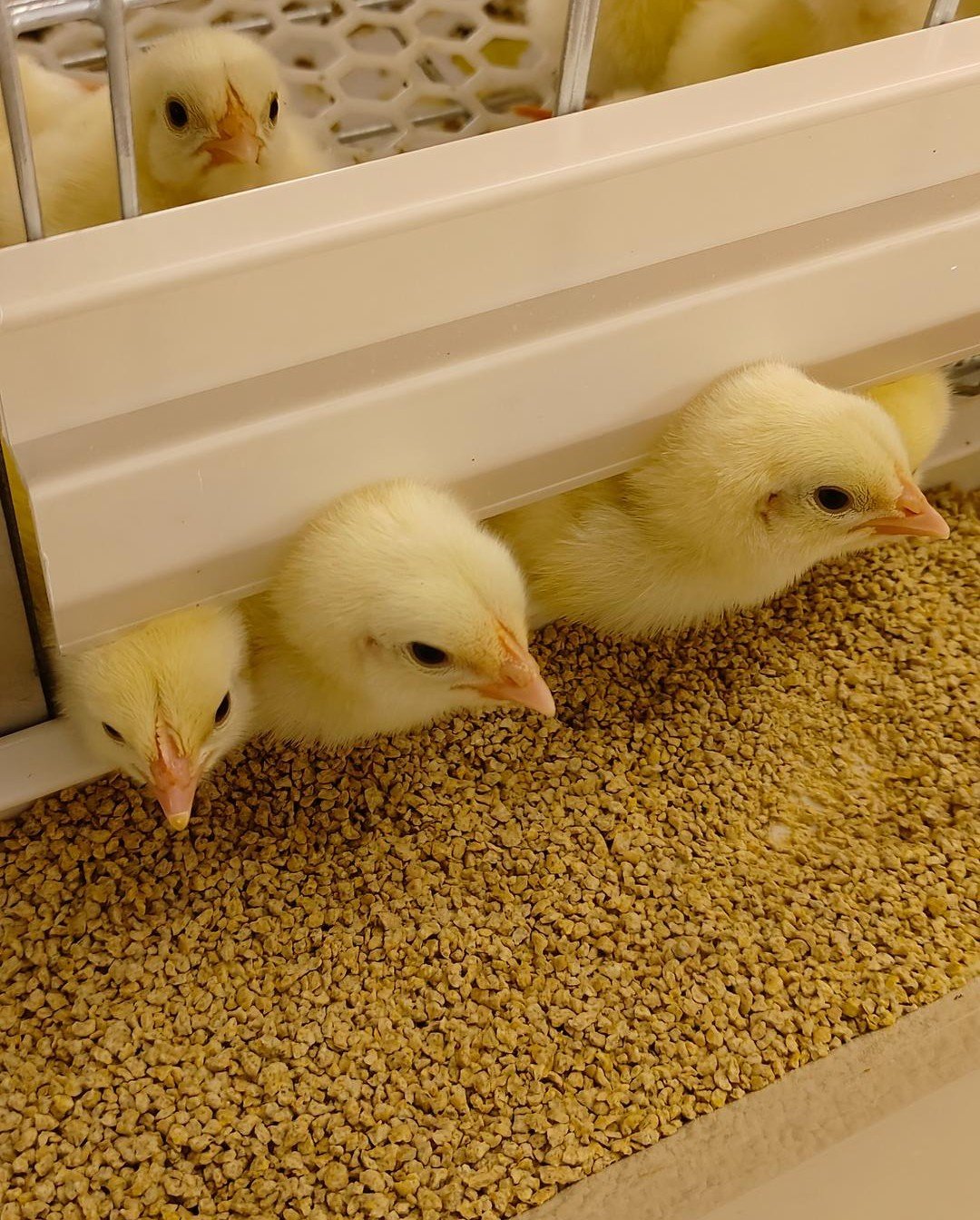
- Multi-Tier / Stacked Cage System: The mainstream model for modern, intensive egg production. It involves housing birds in cages stacked 4 or more tiers high, significantly increasing bird capacity per unit of building area. This is the defining feature of high-density cage farming chickens.
- Automatic Egg Collection System: A set of equipment using conveyor belts to automatically gather eggs from all cage tiers and transport them to the egg room. A standard feature in large-scale farms.
- Environmentally Controlled / Closed House: A windowless house where ventilation, lighting, temperature, and humidity are entirely artificially controlled. This minimizes external environmental interference (especially from wild birds and rodents), facilitating disease control and stable production—a common setup for advanced cage farming chickens.
4. Breeding & Genetics 🧬
Understanding the “background” and breeding systems of layers helps in choosing the right stock.
- Commercial Hybrid / Strain: The standard form of modern commercial layers. It refers to birds produced by specific crossbreeding combinations (e.g., two, three, or four-way crosses) of specialized parent lines, resulting in commercial hens with superior traits like high yield and uniformity.
- Commercial Layer (Final Stock): The end product of the hybrid cross—the hens that farms raise directly for egg production. They exhibit high laying performance, but their genetic traits are not stable, and their offspring are not suitable for breeding.
5. Egg Quality & Hatchery 🥚
Specialized terms related to the eggs themselves and hatching.
- Blastoderm / Germinal Disc (Fertile): A whitish spot about 3-4 mm in diameter on the yolk of a fertilized egg. It is the starting point for embryo development and can be seen during candling.
- Blastodisc / Germinal Spot (Infertile): A much smaller white spot (about 1-2 mm) on the yolk of an unfertilized egg.
- Hatchability: A core measure of hatching efficiency, usually expressed as the percentage of chicks hatched from all eggs set or from fertile eggs only.
💡 How to Apply These Terms More Effectively
The key to truly mastering these terms lies in understanding their interconnections and roles in actual production, particularly within systems for cage farming chickens.
- When Choosing Stock: Focus on the published performance data for the commercial hybrid, such as Age at Sexual Maturity, Lay Rate, and Laying Cycle.
- In Daily Management: The core is monitoring the Lay Rate, Uniformity, and Mortality Rate—they are the barometers of flock health and management quality. Adhere strictly to All-In-All-Out batch management.
- For Improving Profitability: The key is using Phase Feeding to precisely control feed costs and leveraging automation to increase labor efficiency per person. Success in modern cage farming chickens relies on integrating knowledge across all these areas.