The Ultimate Goal of Disinfection in a Hen Cage House
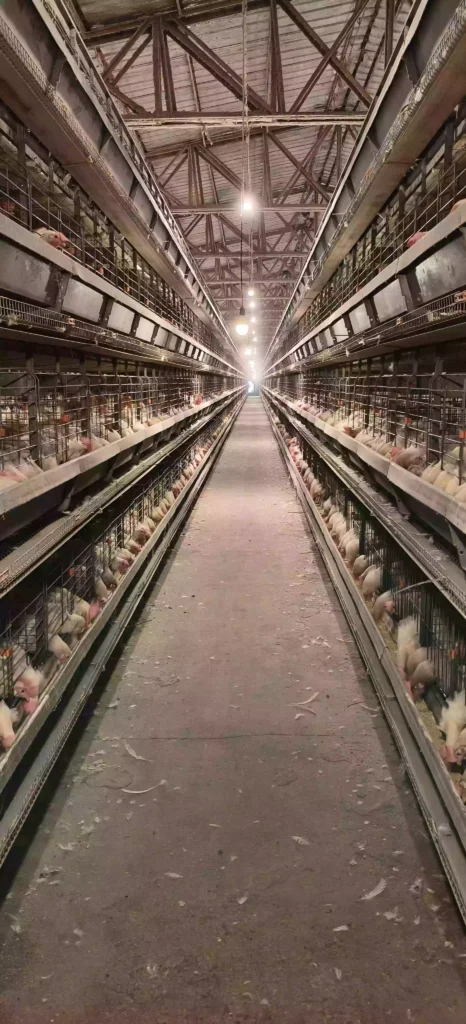
Providing a growth environment free from viruses and pathogenic bacteria to the flock can reduce the risk of disease infection. This is the ultimate purpose of cleaning and disinfecting a hen cage house for farmers. Such cleaning and disinfection represent a minor investment in biosecurity during the pre-stocking phase, yet they significantly mitigate disease risks throughout the rearing cycle. Effective biosecurity measures enhance production performance, reduce losses and medication costs associated with subclinical diseases, thereby lowering overall production costs and improving economic returns.
Let’s briefly discuss the steps and procedures for disinfecting a hen cage house:
After depopulation or transfer, the environment within a hen cage house is complex. The air is filled with ammonia, equipment is soiled with dust and manure, and the surroundings are potentially contaminated with pathogens or viruses. Furthermore, the house contains equipment made of various materials. Therefore, different disinfection methods must be selected to eliminate pathogens and viruses based on the specific environment or material. The following outlines different disinfection methods applied to the washed equipment and environment of a hen cage house:
1. Spray Disinfection
① Spray a 1%-2% caustic soda (NaOH) solution on the cleaned ground outside the hen cage house for thorough disinfection.
② After the house is washed and dried, spray all building structures and equipment with 10% “Baidusha” (a common disinfectant brand) at a 1:200 dilution. Then, spray insecticide into cages, manure pits, wall cracks, etc., to eliminate residual parasites and insects.
2. High-Temperature Disinfection (Flaming)
Use a flame gun to disinfect exposed floors, walls, cages, and other fire-resistant equipment inside the hen cage house.
3. Immersion/Wipe Disinfection
① Soak cloths in a disinfectant solution (10% “Baidusha” at 1:200) to wipe fan blades, shutters, light fixtures, and the external surfaces of water lines. Ensure the lighting system is powered off before wiping fixtures and wires.
② Immerse water lines, drinkers, and feed trays in a disinfectant solution (10% “Baidusha” at 1:600) for 12 hours. Rinse thoroughly with clean water afterwards. Allow drinkers and trays to air-dry before reuse.
4. Fumigation Disinfection
4.1 Preparations before Fumigation
Before fumigation, repair any damaged equipment. Check and ensure the electrical circuits, heating system, ventilation system, and drinking water system are operational.
① The empty hen cage house must be dry before fumigation, with no water droplets on equipment surfaces and no standing water on the floor. Pre-humidify if the relative humidity is below 60%.
② Move all cleaned, wiped, and maintained equipment and bedding materials into the house for simultaneous fumigation.
③ Seal the house: close all exhaust fans and ventilation windows; cover air inlets like cooling pads, manure pit outlets, and rear doors with plastic sheeting.
④ Pre-charge the battery of the thermal fogger and test the machine.
4.2 Disinfectant Selection and Fumigation Process
① Common fumigation disinfectants include potassium peroxymonosulfate compound or glutaraldehyde + benzalkonium chloride compound.
② Choose one of the above disinfectants. Measure the house volume and calculate the total amount of disinfectant needed based on the dosage per cubic meter to ensure an effective bactericidal concentration.
③ Pour the prepared disinfectant solution into the thermal fogger’s tank. Operate the fogger, moving evenly from the rear to the front of the hen cage house, until all the solution is dispersed. Remove the equipment after operation and keep the house sealed overnight. Open it the next day before the new flock arrives.
Both brooder houses and grow-out/layer hen cage houses must undergo thorough washing and fumigation disinfection before the next batch of birds is introduced. A minimum interval of two weeks between batches is essential.
In conclusion, house cleaning and disinfection are just one part of a farm’s biosecurity protocol. Biosecurity is a systematic engineering project that requires continuous practice, testing, and refinement within any hen cage house operation.