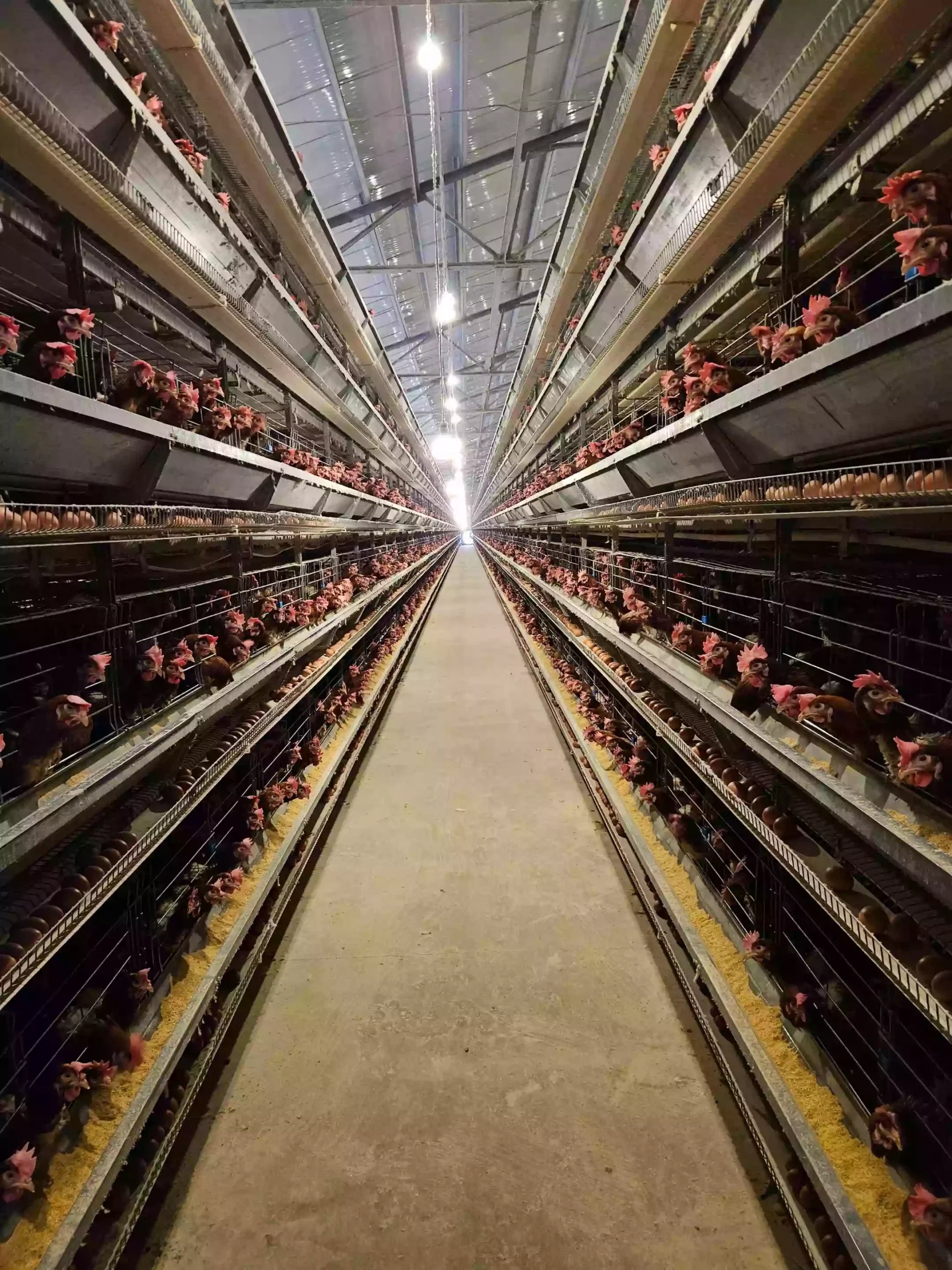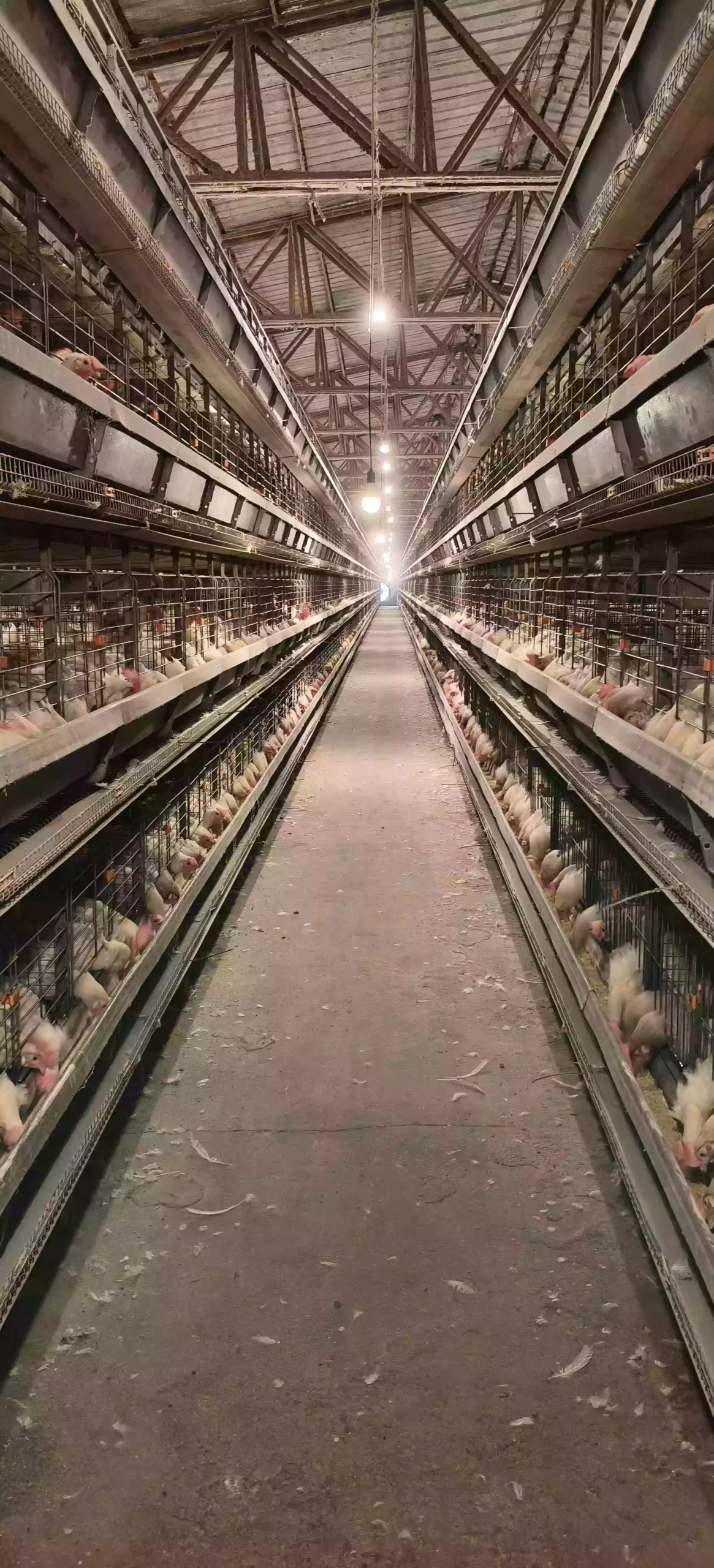

How wide should the ventilation inlets be opened in winter?In the Poultry Climate Control System

1. How Many Inlets Should Be Opened? What Determines the Number?
First, In the Poultry Climate Control System.it must be clear that the total configuration of sidewall inlets during house design must be adequate. The total inlet area should meet the exhaust demand of 50% of the tunnel fans, or at least 30% for high-density cage systems. The following points are discussed based on this premise. Key reference factors are:
- Younger birds require fewer inlets. In the first week, do not exceed 50% of all inlets (unless the total number configured is very low).
- Based on outside temperature, generally open all inlets by 3 weeks of age (varies with flock size and breed).
- Increase the number of open inlets progressively in stages: 1/2 -> 2/3 -> 3/3 (100%).
- Do not increase the opening size of individual inlets until all are in use (see below).
- The specific number to open is determined by the capacity of the minimum ventilation fan bank, which itself is sized based on minimum ventilation requirements. Therefore, selecting the correct minimum fan bank is crucial.
- The number opened must achieve a proper house negative pressure.
2. How Wide Should the Inlets Be Opened? When to Increase the Opening?
- At any age and in any ventilation mode, the minimum inlet opening should be 3 cm. Never open less than 2.5 cm, as a smaller gap disrupts proper airflow.
- In the first week, start with a 3 cm opening, not exceeding 3.5 cm.
- Do not increase the opening width until all inlets are in use.
- Once all inlets are open, increase the opening width in increments no larger than 1 cm at a time, up to a maximum of 6-8 cm. This widening typically occurs around 3-4 weeks of age (varies with flock size and breed). (In winter, openings rarely exceed 8 cm unless the number of inlets is insufficient.)
- If minimum ventilation fans run for more than 50-60% of the cycle timer, the capacity of the minimum fan bank needs to be increased, and inlet openings should be widened to maintain proper negative pressure.
- During high outside temperatures or for older birds, to rapidly exhaust excess heat, the inlet opening should be appropriately widened to increase the air exchange rate (this typically coincides with transition ventilation mode).
3. Are the Inlets Properly Adjusted? How to Assess Your Farm’s Settings?
- Refer to the two key points above.
- Always maintain proper house negative pressure.
- Ensure minimum ventilation fan runtime does not exceed 50-60% of the cycle timer.
- There should be no noticeable downdrafts of cold air in any cross-section of the house.
- All inlets should be opened to the same width and evenly distributed.
- The temperature difference within the house should be less than 1.5-2°C.
4. Common Incorrect Practices
- Too many inlets open with very small openings (<2 cm): The mistaken belief that this provides more even air distribution ignores the fact that such small openings cannot create sufficient airspeed/direction, causing cold air to descend too quickly and leading to cold stress on the flock.
- Excessively large openings (>8 cm): This allows too much cold air to enter at once, and the airstream expands too widely. Cold and warm air fail to mix adequately before reaching the birds, causing cold stress.
- Mismatch between inlet settings (number/size) and fan capacity: This results in excessive or insufficient negative pressure. Both extremes accelerate the descent of cold air.
- Inconsistent opening sizes between front and rear inlets: This may be due to faulty equipment (correctable) or a misguided attempt to mitigate temperature differences. If a significant front-to-back temperature gradient exists, address the root causes (house insulation/sealing, overall ventilation strategy). Never compensate by adjusting inlet openings differentially, as it creates varying negative pressures and airspeeds at different inlets, leading to unstable and inconsistent environmental zones.
- Uneven inlet opening patterns: Randomly closing or opening consecutive inlets in an attempt to fix localized temperature differences is unscientific. The solution lies in reviewing and correcting the overall ventilation design.
- Inlets lacking deflector plates/controls: Without proper guidance, incoming air cannot follow the intended path, causing significant deflection and rapid descent of cold air, leading to flock cold stress.
Summary
In winter ventilation, the ventilation rate primarily affects air quality. The true key is controlling how the cold outside air enters through the inlets, ensuring it mixes thoroughly with the warm air at the ceiling and is transformed into warm air before reaching the birds. Therefore, focusing on the precise management of sidewall inlets is paramount for stable winter production within a well-designed poultry climate control system.