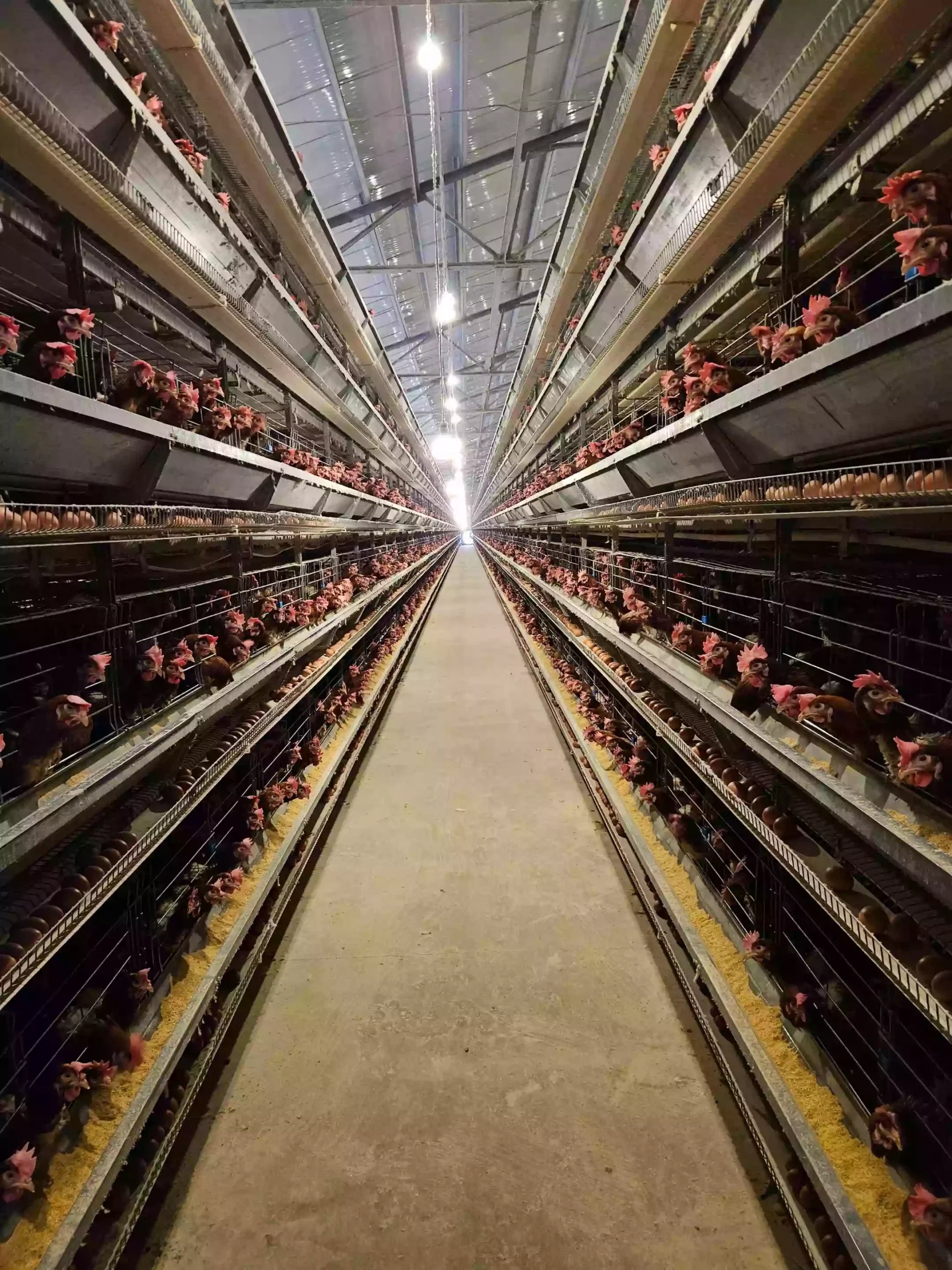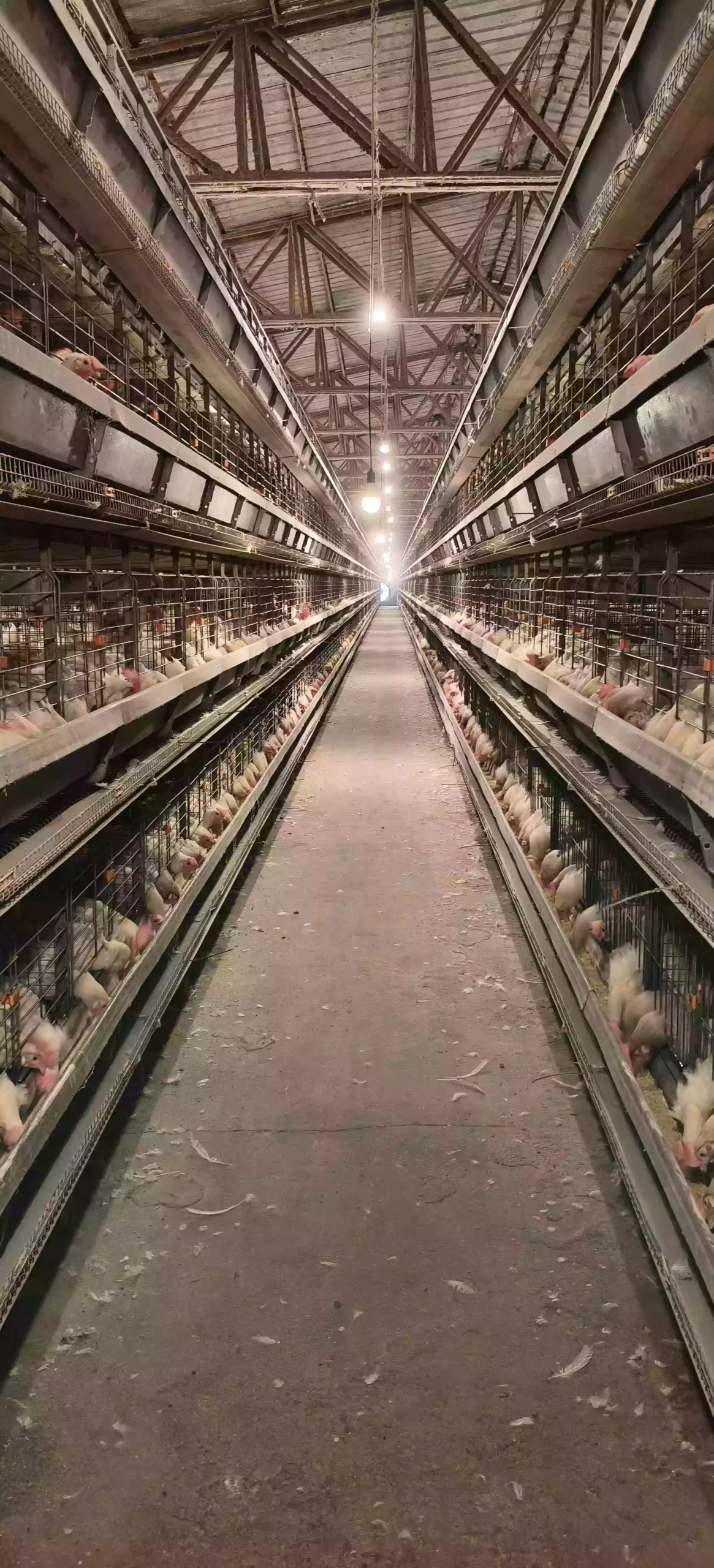

Key Points of Data-Driven Management During the Brooding Period for Laying Hens in Battery Cages

Brooding Phase Characteristics:
- Low Body Temperature & Poor Thermoregulation: Chicks have a body temperature 2-3°C lower than adults at hatch. It begins to rise slowly around day 4. Their down is sparse and skin is thin, making them unable to regulate heat early on. Therefore, maintaining warmth, especially in the early stage, is critical.
- Rapid Growth & High Metabolism: Layer chick weight doubles by 2 weeks, increases 10x by 6 weeks, and 15x by 8 weeks. Their fast metabolism and heart rate require both adequate nutrition and excellent air quality.
- Fast Feather Growth & Molting: Chicks molt four times by 20 weeks (4-5w, 7-8w, 12-13w, 18-20w). Feathers contain 80-82% protein (4-5x more than meat/egg), necessitating a high-protein diet.
- Underdeveloped Digestive System: Chicks have small GI tracts, limited intake, underdeveloped glands (lacking certain enzymes), and poor gizzard function, making them weak digesters. Feed must be low-fiber, highly digestible, and offered little and often.
- Weak Immunity & High Sensitivity: Chicks have poor immune function, start producing their own antibodies around day 10 (in small amounts), and maternal antibodies decline to a minimum around 3 weeks, making days 10-21 a critical period. They are susceptible to diseases and environmental stress and sensitive to nutrient deficiencies or toxin overdoses. Vaccination, preventive medication, a clean environment, and balanced nutrition are essential.
- Easily Frightened & Defenseless: Unusual sounds or sights can cause distress. The brooding environment must be quiet and protected from pests.
Performance Standards: Survival rate >95%; Body weight: 370g by 35 days; Uniformity >80%.
Disease Focus: Infectious Bronchitis (IB), Gizzard Erosion/Ventriculitis, Mycoplasma Synoviae (MS), Salmonella.
How to Achieve Standards in Battery Cages for Laying Hens:
- Stocking Density: 0-3 days: 60 chicks/m²; 3-42 days: 32 chicks/m²; 42-126 days: 20 chicks/m². Density must be adjusted for battery cages for laying hens to ensure adequate space.
- Temperature Requirements:
- Monitor the flock’s comfort (behavior), not just the thermometer.
- Avoid temperature fluctuations >4°C.
- In cages, place the thermometer 2 cm above the chicks’ feet.
- Prevent drafts.
- Use higher temperatures with lower density to prevent Pullorum Disease.
- Humidity Requirements:
- High Temp + Low Humidity: Causes dehydration and predisposes to respiratory diseases (e.g., CRD).
- High Temp + High Humidity: Increases heat stress.
- Low Temp + High Humidity: Increases chill, leading to colds and immunosuppression.
- Low Temp + Low Humidity: Some farmers in cold northern areas use constant 30°C with 50% RH with some success.
- Uniformity:
- Prioritize 35-day body weight uniformity. Weak chicks, outcompeted at feeders, may eat more powdered minerals/vitamins and become thinner with poor pelvic development, while stronger ones eat more granules and grow larger. Early developmental issues are hard to correct later, leading to poor uniformity, prolapse, and vent pecking at lay.
- Group early: For floor/wire brooding, group by 14 days. For battery cages for laying hens, group gradually during weeks 3 and 4. Aim for 370g and >80% uniformity by 35 days.
- Shank Length – A Key Indicator of Brooding Success:
- Brooding ends when over 90% of chicks have completely shed neck down. Head feathers typically shed before 35 days, neck feathers by 38-42 days. Delayed shedding indicates poor development.
- The signal to switch to grower feed is a shank length of 85mm, not necessarily 57 days of age. If shank/weight are not达标 by 56 days, delay feed change (max 2 weeks).
- Importance: The egg-laying passage is formed by the pubic bones. Short shanks indicate poor pelvic development, leading to a narrow passage. Increased abdominal pressure during lay can cause prolapse. Poor bone development, especially long bones, reduces calcium reserves, leading to poor shell quality at night when eggshells are formed.
- Feeder Space: Ensure adequate linear feeder space per bird as per breed guidelines.
- Lighting Program:
- Principle: Decrease only during brooding/growing; increase only during lay. The 2018 revised guideline for closed houses recommends an intermittent program: 0-3 days: 22L; 4-7 days: 21L; from 7-14 days, gradually reduce by 1 hour weekly until reaching natural day length.
- Intensity: Week 1: 20-30 lux; Weeks 2-19: 5-10 lux; Week 19 to end of lay: 10-20 lux. A clean, shaded 2.7-watt incandescent bulb at 2.1-2.4m height provides ~10 lux at bird back level in floor systems.
- Ventilation: Provides oxygen, reduces harmful gases. Maintain ammonia <25 ppm, CO <50 ppm, CO₂ <5000 ppm to protect heart/lung function and gut health, reducing respiratory/enteric diseases.
- Principles: Balance ventilation and temperature; frequent, short cycles; heat first, then ventilate; prevent direct drafts on birds; maintain hygiene; use roof vents effectively.
- Beak Trimming: Recommended to use infrared at the hatchery. If necessary, trim at 7-10 days, and possibly re-trim at 6 weeks or 12-14 weeks. Open-sided houses may require a second trim.
Effective data-driven management during brooding is foundational for the lifetime performance of battery cages for laying hens systems, impacting everything from early health to long-term productivity and egg quality.