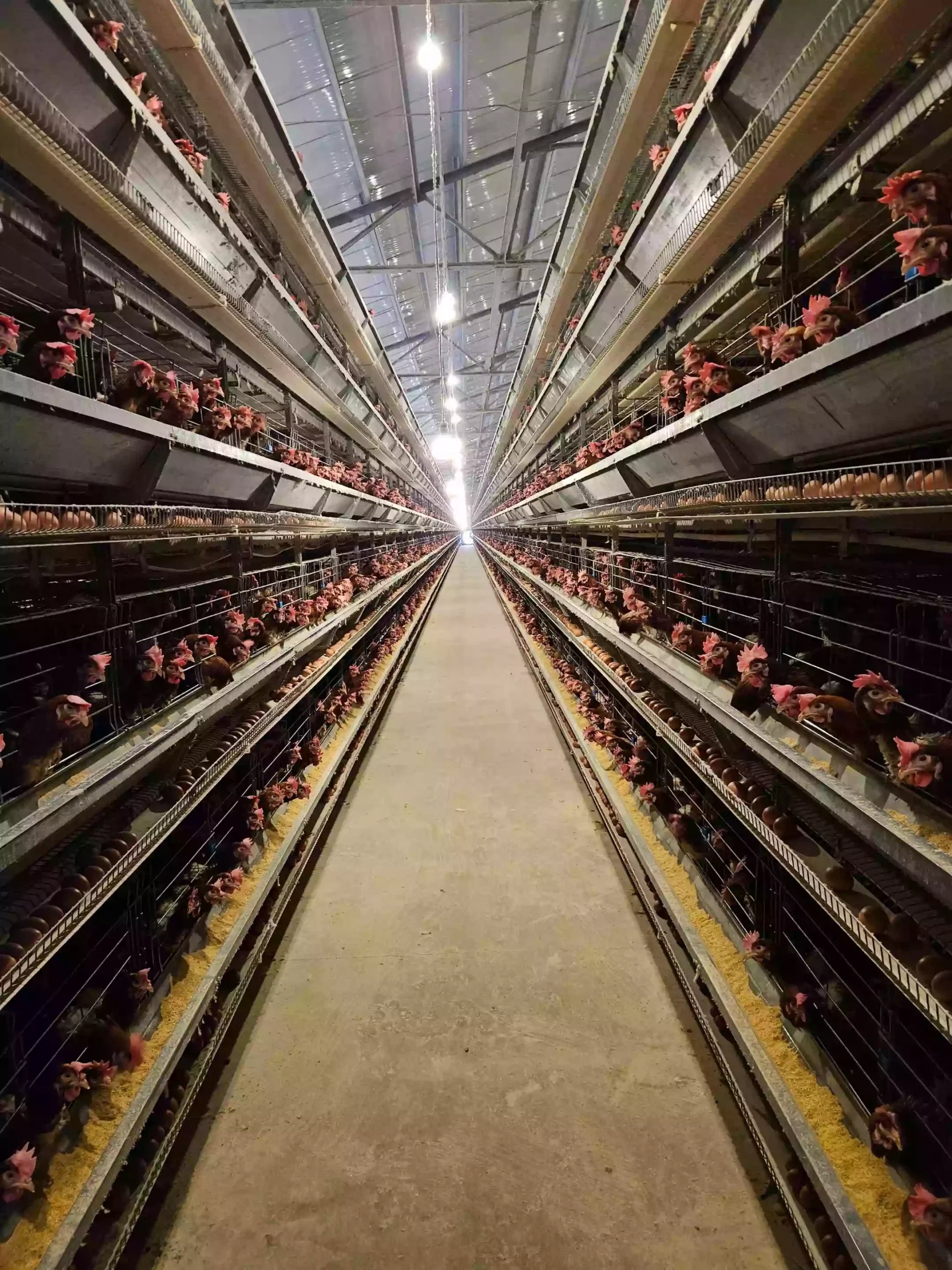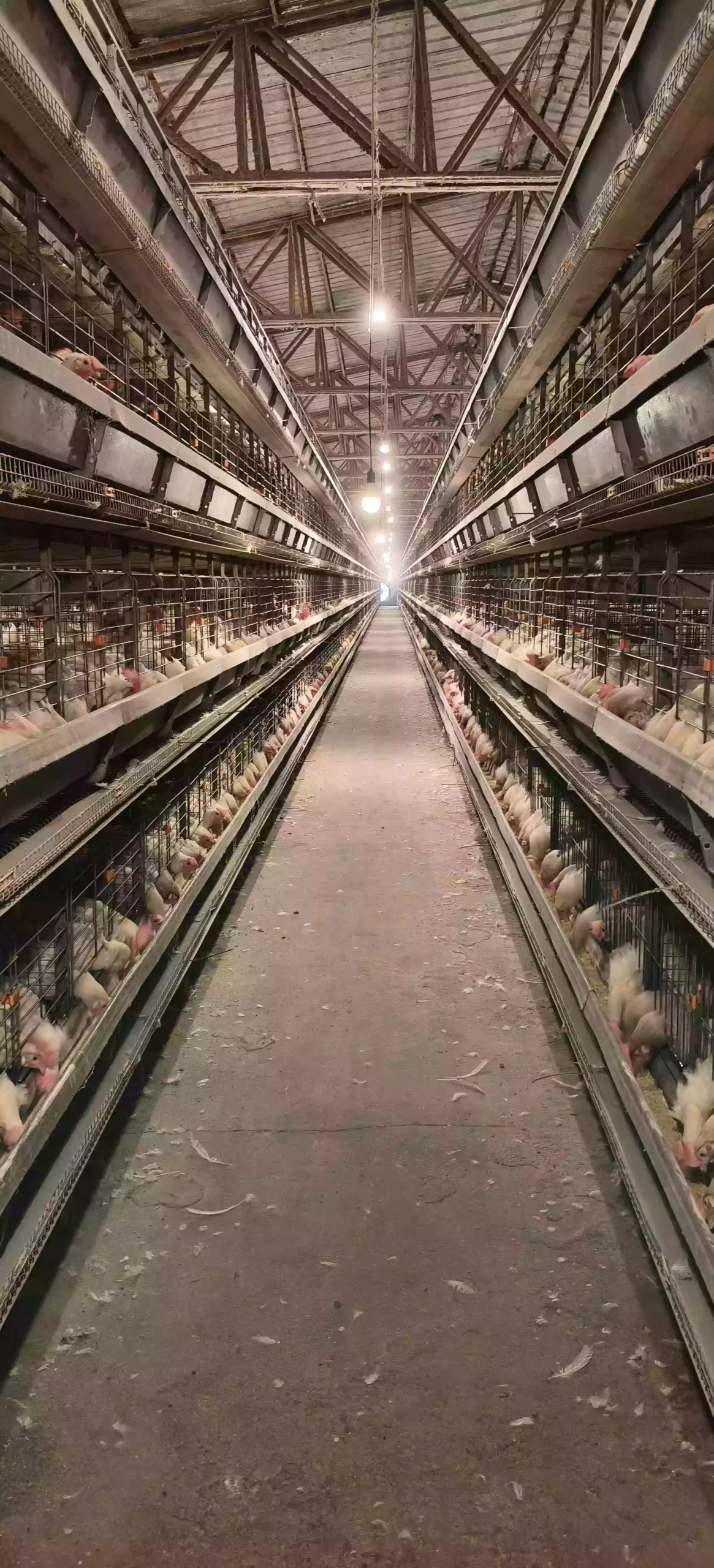

Lighting and Ventilation for Automated Battery cage
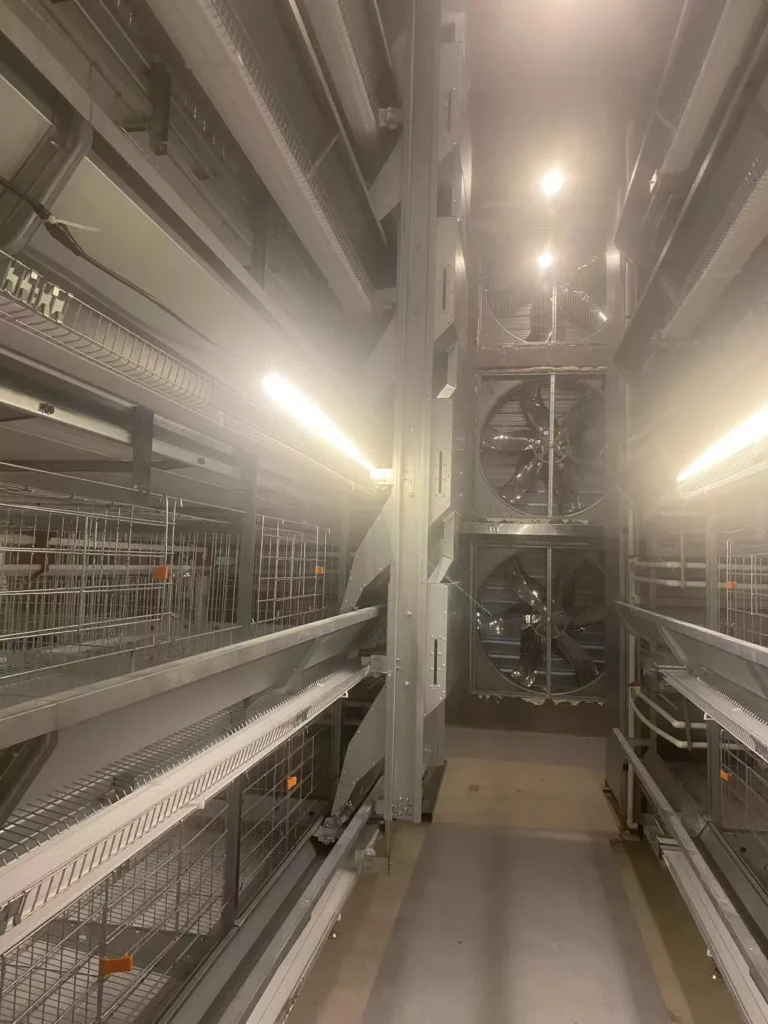
I. Key Points of Lighting Management in Confined Housing
Sufficient light intensity is crucial within an automated battery cage to stimulate chick feeding and ensure uniform exposure across all tiers… The daily dark period should be fixed and consistent to allow birds’ rest and metabolic recovery, a key aspect of managing a battery system in poultry.
- Ensure even light distribution throughout the house.
- Do not initiate light restriction until the birds’ average body weight exceeds 180 grams.
- Reduce the dark period before slaughter.
- Extend the light period to stimulate feed intake if the flock is stressed or requires increased consumption.
- Avoid having the dark period during the coldest part of the day.
- Excessively bright light can cause cannibalism and sudden death syndrome (flip-over).
II. Key Points of Ventilation Management
Purpose: Remove harmful gases, exhaust excess heat, and utilize wind chill effect. Effective ventilation is critical in an automated battery cage to maintain uniform air quality across all levels.
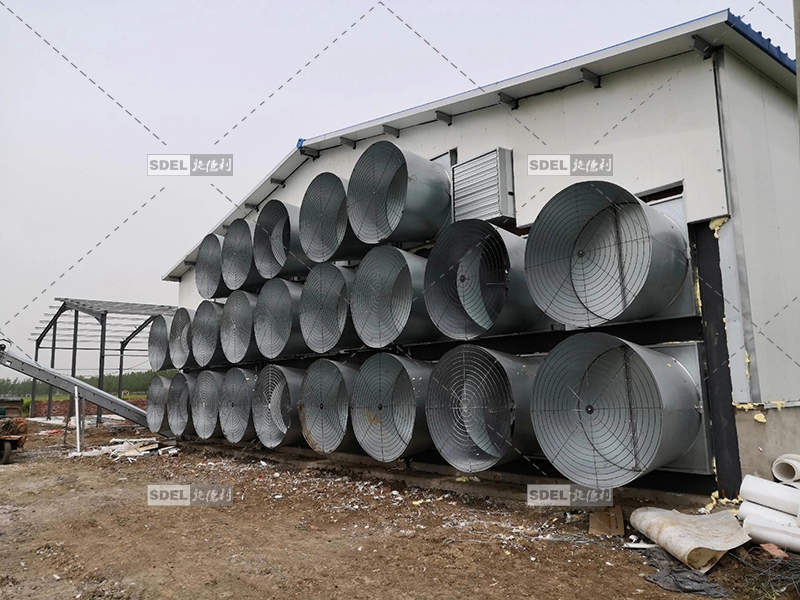
Minimum Ventilation Management:
Minimum ventilation is essential for maintaining flock basic life needs. Ventilation below the minimum requirement threatens flock survival and compromises health.
- Normal: 1.0-1.5 m³/h/kg body weight (0.6-0.9 CFM/kg).
- Extreme Cold: 0.8 m³/h/kg body weight (0.5 CFM/kg).
- High Quality: 2-3 m³/h/kg body weight.
- Use a 5-minute cycle timer.
Negative Pressure:
House negative pressure ensures incoming air reaches the peak of the house where hot air accumulates. The required negative pressure depends on house width and the distance the air must travel. Mixing incoming cold air with warmer air increases moisture content, thus reducing relative humidity. Because cold air is heavier, it forces warm air down to floor level, increasing the temperature at bird level.
Transitional Ventilation: During cold winter periods, ridge/ceiling ventilation is preferred initially (if available). When ridge ventilation capacity reaches 40,000 m³/h, switch to tunnel ventilation mode.
Tunnel Ventilation: Switch from transitional to tunnel ventilation when cooling via wind chill effect is needed due to excessive heat.
Air Velocity at Bird Level:
Pay special attention to the wind chill effect during the early rearing period (it can be 1-2 times greater than normal).
- Days 0-14: 0 m/s at bird level.
- Days 15-21: Should not exceed 0.5 m/s.
- Days 22-28: Should not exceed 0.8 m/s.
- For summer cooling, design air velocity in the house should reach above 2.8 m/s.
Air quality must be normal in every corner of the house. Ensure the house is tightly sealed, especially around inactive fans in winter. If air velocity is insufficient in summer, install air deflection curtains to increase it.
III. Supplementary Discussion on Lighting and Growth Management
Proper lighting and ventilation are fundamental to the success of an automated battery cage system. Modern environmental controllers can integrate lighting schedules with ventilation rates, optimizing the entire battery system in poultry for bird health and productivity.However, improper lighting programs, intensity (too bright or too dim), or duration (too long or too short) adversely affect the birds.
This section first addresses the scientific installation of artificial lighting: the distance between lights should be 1.5 times the height of the lights above the birds. The horizontal distance from the lights to the wall should be half the spacing between lights. Lights should be installed in a staggered, evenly distributed pattern. The number of bulbs required can be determined based on these spacing rules. Adhering to these requirements ensures a reasonably uniform light distribution.
Modern white-feathered broilers exhibit rapid growth, creating a conflict between fast muscle development and the slower maturation of internal organs (heart, lungs). Incorrect practices during the early rearing phase by some farmers can exacerbate this issue, leading to superior early growth but subsequently higher disease incidence, treatment difficulties, and poor rearing performance later on.
The key to resolving this conflict lies in implementing feed and light restriction during the early chick stage. This controls early muscle growth rate, adjusts light intensity to promote internal organ development, and enhances disease resistance. This approach addresses the challenges of treating late-stage diseases, high costs, and high mortality/morbidity. Utilizing controlled lighting and leveraging the compensatory growth characteristics of broilers helps control feed intake, reduce the feed conversion ratio (FCR), ultimately lowering farming risks and improving economic returns in broiler production.