
Optimizing light management in battery cage for layers
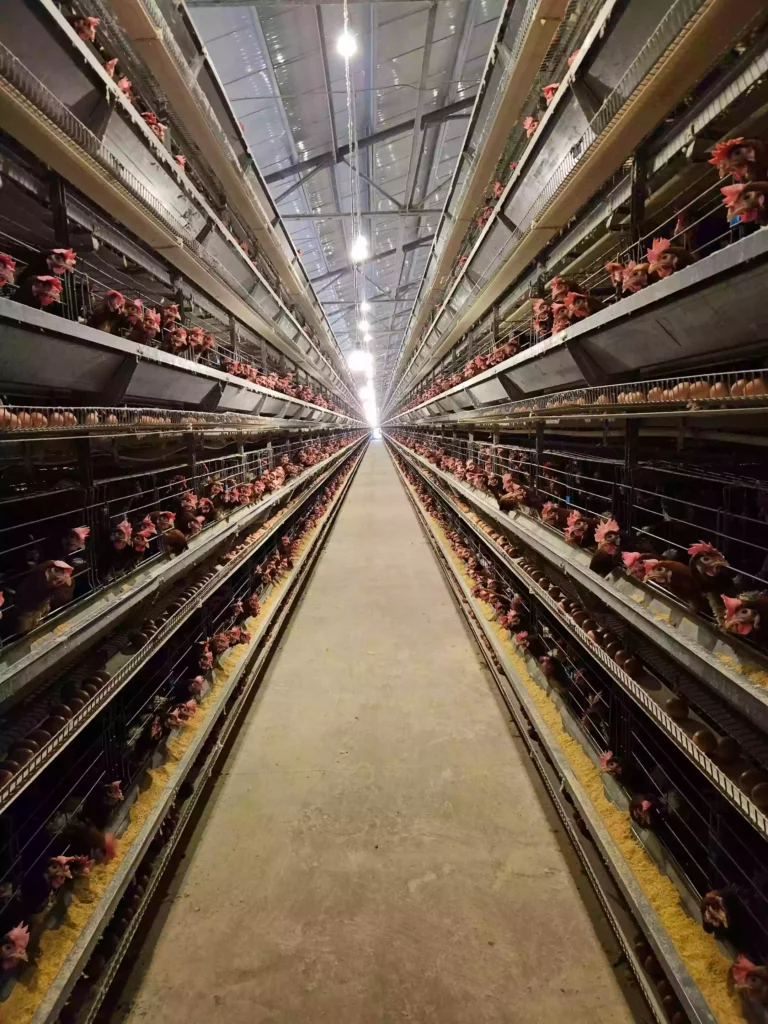
Under natural conditions, birds reach sexual maturity and begin breeding in response to changes in objective environmental factors, primarily the increasing length and intensity of daylight. Therefore, wild birds naturally reproduce during periods of gradually lengthening and strengthening daylight. After discovering this pattern, the poultry industry learned to intervene in the reproduction of domestic poultry by artificially controlling light, a practice that is fundamental in modern battery cage for layers operations to synchronize and maximize egg production.
Light stimulates the hypothalamus and anterior pituitary gland through the bird’s eyes, prompting the production of key reproductive hormones (LHRH, LH, FSH). These hormones act on the ovaries to produce estrogen and progesterone, driving the development of sexual characteristics and ovulation. In the controlled environment of a battery cage for layers system, managing this photostimulation is a precise science crucial for flock uniformity.
Table 1: Mechanism of Light Action
| Organ | Hormone | Target Organ | Function |
| Hypothalamus | Luteinizing Hormone-Releasing Hormone (LHRH) | Anterior Pituitary | Stimulates the production of sex hormones (LH/FSH) |
| Anterior Pituitary | Luteinizing Hormone (LH) | Ovary | Stimulates ovarian hormone production |
| Follicle-Stimulating Hormone (FSH) | Ovary | May promote early follicular development | |
| Immature Follicles (Developing Follicles) in the Ovary | Estrogen | Liver | Stimulates fat synthesis |
| Oviduct | Stimulates oviduct growth | ||
| Skeletal System | Promotes medullary bone development | ||
| Comb | Comb growth and reddening | ||
| Feathers | Pre-sexual maturity molting | ||
| Pubic Bones | Pubic bone spreading, preparing for laying | ||
| Mature Follicles in the Ovary | Progesterone | Hypothalamus | Promotes ovulation |
Light stimulation is only effective when the flock’s growth is adequate. The timing of the first light stimulus, critical for future yield, depends on body weight, uniformity, and physical development. This is especially important in a high-density battery cage for layers house where individual monitoring is essential.
When the flock reaches the age for light supplementation, we can determine if it meets the requirements by checking the following items before adding light:
1.Development of Comb and Wattles: The comb and wattles should show some development. The comb should appear thick and upright, the wattles should become redder and larger, and the faces of some birds may turn red.
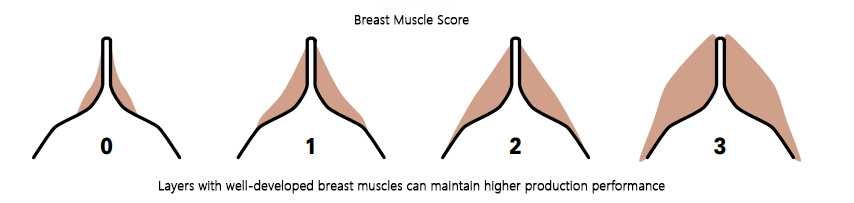
2.Flock Body Weight and Breast Muscle Condition: The flock’s body weight should meet the standard requirements, with specific considerations based on the earlier skeletal development of the flock. Breast muscle development should be good, with a breast muscle score of “2” for commercial layers and “3” for broiler breeders.
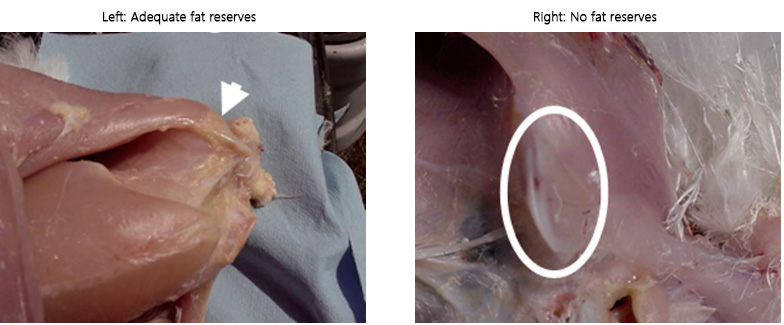
3.Abdominal Fat and Pubic Bone Development: Birds must have deposited a certain standard of abdominal fat; the abdomen should feel soft and not tight to the touch. The pubic bones should have an opening of two fingers width, with some fat deposition at the tips.
4.When adding light, all the above factors must be considered comprehensively to determine the timing, based on the flock’s body weight and uniformity. If flock uniformity is poor, light addition can be appropriately delayed to allow time for the slower-developing birds to catch up. The situation of faster-developing birds must also be considered to allow the flock to start laying as simultaneously as possible and gradually reach peak production.
Important Notes: Two Issues Regarding Flock Body Weight Before the First Light Addition
(1) Consequences of Insufficient Weight Gain and Poor Ovarian Development:
① Delayed onset of lay;
② Lighter egg weight in early lay;
③ Increased proportion of unqualified/abnormal eggs;
④ Short duration of peak production.
(2) Consequences of Actual Body Weight Exceeding the Standard, Leading to Poor Uniformity in Sexual Maturity and Body Weight:
① Early onset of lay (first egg);
② Larger egg size, more double-yolked eggs;
③ Increased proportion of unqualified eggs;
④ Increased feed consumption throughout the laying period;
⑤ Lower peak production, faster decline in production later, reduced total egg output;
⑥ Decreased fertility in breeder flocks;
⑦ Increased probability of prolapse.