
The 20-Day “Curse” in Broiler Production: Decoding the Hidden Crisis in Cage Broiler System
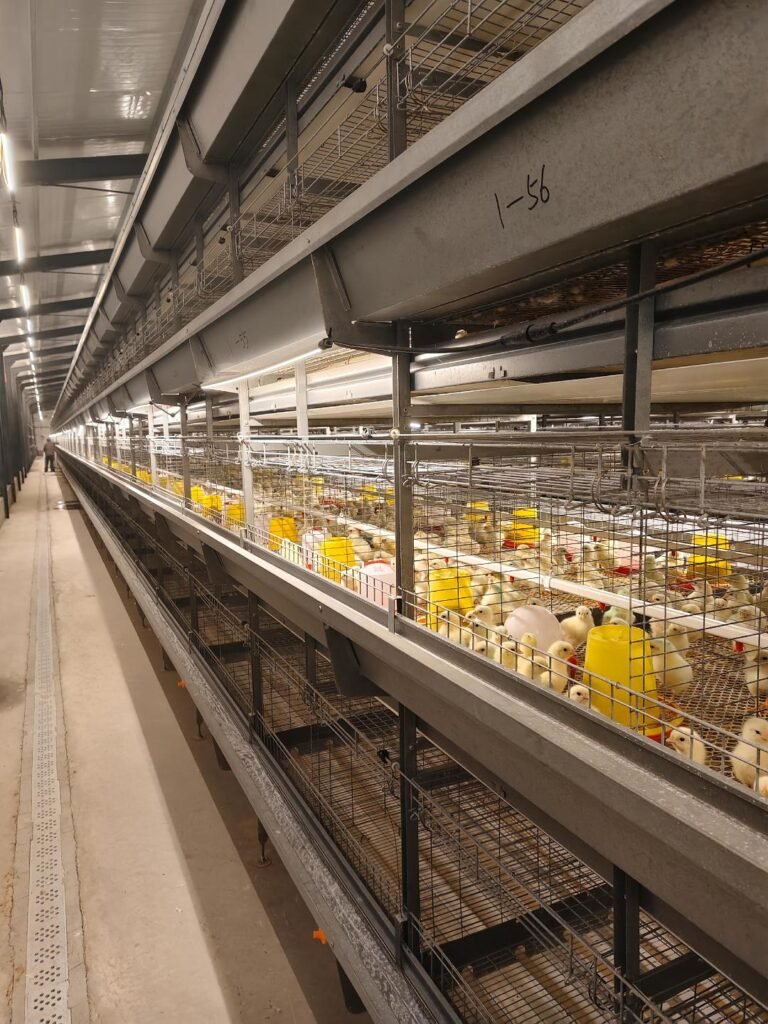
Any farmer who has raised broilers knows the headache: around 20 days of age, flocks seem to hit a “curse”—problems start piling up. Experienced farmers are all too familiar: a seemingly energetic flock suddenly shows loners standing still with drooping heads and closed eyes, overall feed intake drops, respiratory symptoms flare up, uniformity suffers, and mortality spikes. Post-mortems reveal the grim picture: multi-organ hemorrhages, airsacculitis, pericarditis, peri-anal inflammation… signs of systemic inflammation are everywhere.
Why does this “hump” consistently appear around 20 days? What exactly happens to the flock at this stage? Drawing on extensive literature and over 20 years of farming experience, I’ve summarized six key reasons. Let’s break them down.
1. The Immunity “Gap”: Maternal Antibodies Fade, Vaccine Immunity is Not Yet Fully Established
Chicks hatch with maternal antibodies, a built-in “shield” providing strong initial disease resistance. But like battery power, it depletes with use. Maternal antibodies decline with age, becoming nearly depleted by around 20 days. Studies show that while maternal antibodies offer full protection within the first 14 days, they approach zero by 28 days.
Farmers vaccinate against diseases like Avian Influenza H9, Newcastle Disease, Infectious Bronchitis, and Gumboro. Antibodies from these vaccines begin to rise around 23 days, reaching protective levels only by around 30 days. For other non-vaccinated diseases, antibody levels only decline further.
This creates an awkward “gap” between 20-30 days—a low point in overall antibody defense. With vaccine immunity not yet up and maternal immunity down, the flock becomes highly vulnerable to any present pathogen. This immunity challenge is a critical factor to manage in any cage broiler system.
2. Environmental Deterioration: Microbes Thrive in the Coop
Initially, the brooder house is thoroughly cleaned and disinfected. By mid-cycle, the situation changes. Feather shedding increases dust. Poor manure management raises ammonia levels, significantly increasing airborne microbes and respiratory disease risk.
Water quality also deteriorates. Testing at 24 days can show bacterial counts as high as 1700 CFU/ml and coliforms at 76 MPN/100ml. Drinking such water inevitably leads to gut issues.
E. coliis largely an environmental disease. Poor management, suboptimal environment, and high stocking density—common pressures in a high-density cage broiler system—dramatically increase its incidence. Once bacteria enter the respiratory tract and reach air sacs, they cause airsacculitis, which can progress to pericarditis and perihepatitis. Affected birds become listless, anorexic, pass yellowish droppings, and mortality climbs.
3. Increased Ventilation: A Double-Edged Sword that Can “Invite the Wolf”
As body weight increases, so does oxygen demand. In closed houses, ventilation must be increased, with fans running more frequently and inlets adjusted accordingly. This is where many fail. Poorly adjusted inlets create drafts or sudden wind gusts. At 20+ days, broilers are not fully feathered and are highly susceptible to chilling. Cold stress crashes their immunity, opening the door to disease. This is especially common in fluctuating temperatures of winter/spring, where respiratory infections around 20 days are frequent, often triggered by thermal stress. Ventilation is a science, not just turning fans on. Managing this balance is crucial in a cage broiler system to prevent temperature stratification and drafts.
4. Poorly Executed Expansion (“De-stocking”) Adds Stress
Broilers grow rapidly between 10-20 days, especially in winter. Expansion (increasing the birds’ floor space) is necessary. The new area must be pre-warmed to match the original zone’s temperature. Many farmers rush, expanding before temperatures equalize, causing significant temperature stress. The handling stress during the move adds up. This cumulative stress often manifests in problems that “explode” around 20+ days. A well-managed expansion process is vital in a cage broiler system layout to minimize this transitional shock.
5. Drug Overload: Liver and Kidneys Buckle Under Pressure
While antibiotic reduction is encouraged, medication remains a significant part of broiler farming. Drugs are used early for bacterial issues (based on sensitivity tests), around 10 days for minor respiratory signs, and near 20 days for enteric problems. Various vitamins and immunostimulants are also used before 30 days. By 20+ days, the liver and kidneys are under maximum metabolic strain from processing these compounds. More drugs mean a heavier metabolic burden and reduced overall resistance. Drugs are a double-edged sword; misuse can become a disease trigger. Judicious use is key, especially in a confined cage broiler system where drug residues and microbial resistance can quickly become flock-wide issues.
6. Complacent Management: Hidden Risks Accumulate
The brooding phase is intense—daily temperature/humidity/ventilation adjustments, all vaccinations completed before 21 days. Early mortality from chick quality issues stabilizes by around 20 days. Many then feel “the hardest part is over,” relax, and management becomes complacent. The routine shifts to just feeding. Minor issues are overlooked. Negative impacts accumulate silently. By the time problems are obvious, it’s often too late. Experienced farmers know raising broilers is like raising a child—vigilance is required throughout. The mid-to-late phase demands even greater attention.
Problems at 20+ days are never due to a single cause. They result from the convergence of fading immunity, a deteriorating environment, improper ventilation, expansion stress, drug burden, and relaxed management. These factors intertwine and culminate at this critical stage.
Understanding these reasons demystifies the “20-day curse.” It’s not magic, but a series of predictable and preventable management failures. Addressing each link in the chain makes raising healthy, uniform flocks entirely achievable. This holistic approach to health and environment is the foundation of a successful modern cage broiler system.
Fellow farmers, have you encountered this? Share your experiences and lessons in the comments.