
Seven Key Points for Selecting Superior and Culling Inferior Laying Hens in Autumn – Details Matter
With a Focus on Cage Rearing of Poultry
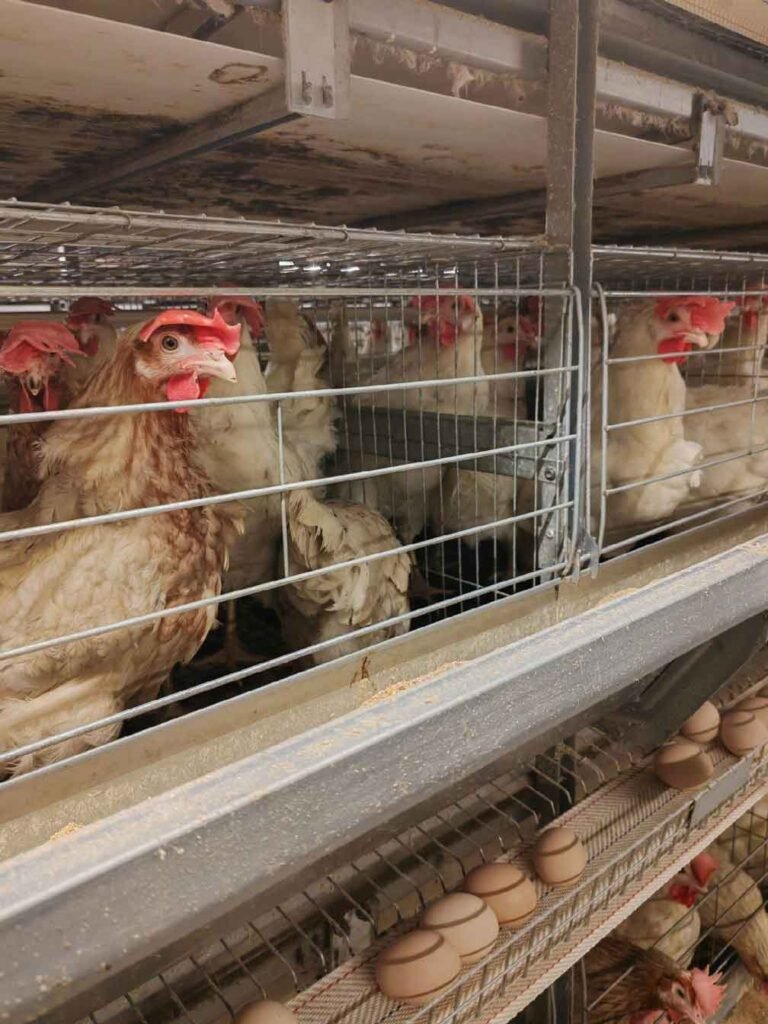
As autumn arrives, older hens begin molting while new pullets start laying eggs. This is the critical season to adjust flocks and select breeding stock. Planned evaluation and culling of laying hens in cage rearing of Poultry systems can significantly improve economic returns. By identifying physiological traits, low-producing hens should be culled promptly while retaining high-yielding ones. The criteria for evaluation are as follows:
- Comb and Wattles
Actively laying hens exhibit bright red, warm, and finely textured combs and wattles due to robust blood circulation. Non-layers show pale, shrunken, dry, and cool combs. - Vent Area
Productive hens have large, oval, moist, and relaxed white vents. Non-layers display yellowish, wrinkled, and dry vents. - Pubic Bones
Laying hens possess soft, flexible, and widely spaced pubic bones (3-4 finger widths). Inactive hens have rigid, narrowly spaced bones (1-2 fingers) that are inflexible. - Distance Between Pubic Bones and Keel
This indicates abdominal capacity. High-producing hens have a 4-5 finger gap, while poor performers show only 2-3 fingers’ width. - Abdomen
Laying hens have enlarged, soft, and elastic abdomens. Non-layers exhibit tight, firm abdomens with coarse skin. - Pigmentation
Active layers lose yellow pigmentation in beaks and legs due to yolk formation, turning them pale yellow or white. Non-layers retain yellow tones in these areas. - Molting
A vital indicator of productivity. High-yielding hens often have dull, ragged feathers during molting but resume laying quickly after regrowth. In cage rearing of poultry, efficient hens molt late and rapidly, continuing production post-molt, while poor layers prioritize feather renewal over egg production.