Understanding Animal Needs and Feed Particle Size: A Key Strategy for Optimizing Performance in a Broiler Poultry Farm

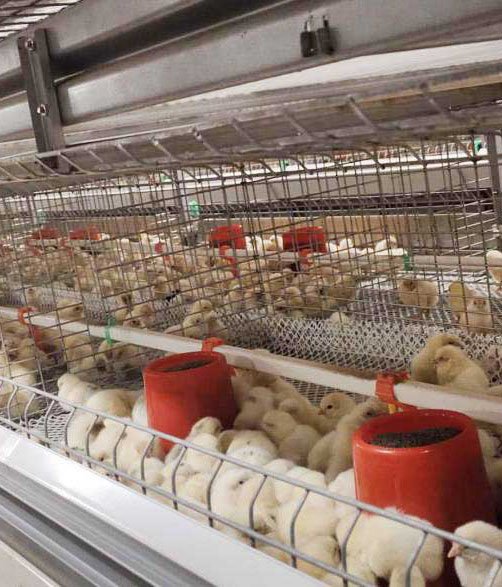
As a core component of agriculture, the broiler industry has undergone tremendous changes over recent decades. This success stems from two main drivers: market growth and significant improvements in production performance and efficiency. The goal of a broiler poultry farm is to achieve target slaughter weight in the shortest possible time, while maintaining flock uniformity, animal welfare, and environmental standards. Flock productivity depends largely on feed intake and performance, both of which can be optimized by adjusting feed form and particle size.
Feed is commonly categorized by form into pellets, crumbles, and mash. In the broiler industry, pellets and crumbles dominate, though mash is still common in less intensive regions. Additionally, individual particle size—independent of feed form—plays a critical role in flock performance and health.
Feed Intake Regulation Through Form and Particle Quality
Although it is challenging to align feed production with the feeding behavior of the flock, this also presents an opportunity to regulate feed intake. Pelleted feed offers several advantages, including reduced waste and improved feed hygiene. However, its greatest benefit over mash is the ability to increase feed intake in broilers.
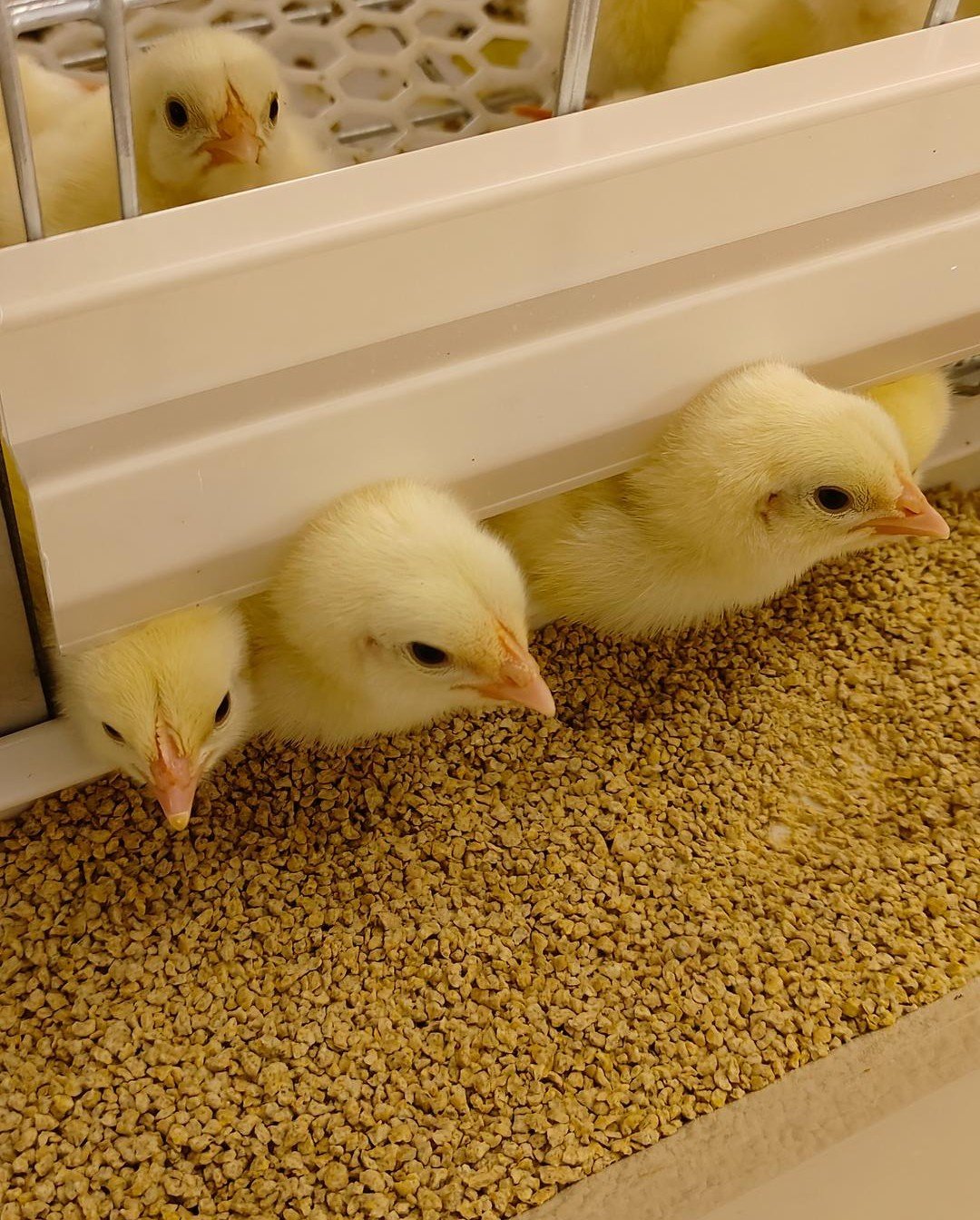
Birds naturally prefer coarser particles at all ages. When cylindrical or spherical feed particles are consumed, broilers ingest more energy and nutrients within a limited feeding time. This is especially critical for maximizing intake in young chicks. Birds select particles based on shape, color, size, and consistency. The more uniform the diet and the narrower the particle size range, the less time birds spend searching for preferred large particles.
When formed into cylinders or spheres, coarse particles such as cracked corn do not separate from the feed matrix as they would in mash. This ensures a more balanced nutrient supply, including micro-ingredients of varying densities such as heavy minerals or light fiber components. Consequently, compared to mash, pelleted feed increases intake and improves performance—which explains why most broiler feed is pelleted. It is also essential to compare pellet quality (measured by fines content). Broilers fed poor-quality pellets perform similarly to those on mash, while those fed high-quality pellets show superior feed intake, weight gain, and feed conversion, particularly during the later growth stages. Since handling and transport can degrade pellet quality, it is important to distinguish between quality measured at the mill and quality at the point of consumption. High-quality pellets are essential for maximizing intake and performance.
Particle Size and Gizzard Development
Beyond feed form, the particle size of feed ingredients influences digestion as pellets dissolve in the crop. The gizzard acts like a roller mill, grinding feed into finer particles. Coarse particles stimulate gizzard activity, improving grinding efficiency and gizzard development. They also remain longer in the gizzard, enhancing digestion and weight gain.
Conversely, fine particles can lead to health issues such as reduced intestinal motility, proventricular dilation, poor water and electrolyte reabsorption, increased feather pecking, and greater susceptibility to intestinal pathogens. While reducing particle size may improve apparent nutrient digestibility, it does not alter apparent metabolizable energy values. For corn, ileal starch digestibility ranges from 95% to 98%, indicating minimal variation due to particle size. Overall, larger particles are more beneficial for broiler performance and health, except during the early growth stages. For chicks, whose digestive systems are immature, finer particles are necessary to facilitate nutrient absorption.
Impact of Processing Parameters
In broiler feed production, the primary goal of grinding is to produce coarse particles with a narrow particle size distribution. Roller mills are ideal for this purpose, producing irregular-shaped particles with a large specific surface area while maintaining coarseness.
Grinding directly affects broiler performance, but average particle size and distribution have an even greater impact. During pelleting, particle size is further reduced. The coarser the initial grind, the greater the reduction in particle size during pelleting, resulting in a narrower particle size distribution after pelleting.
Recommended Particle Size Reference for Broiler Feed
Optimal particle size depends on feed form, bird age, sex, health status, and ingredient type. Corn-based diets generally require larger particles than wheat-based diets. For mixed-sex chicks, the recommended average particle size range is 900–1100 μm, while older birds prefer 1100–1500 μm. Males require larger particles than females. A general guideline is to use finer grinding for starter feed and increase particle size during later growth stages.
Key Takeaways
Based on broiler feeding behavior, pellets or crumbles are recommended to achieve high feed intake, prevent particle segregation, and minimize feed waste. Good pellet quality improves performance, especially during the later growth stages. Although coarse grinding may slightly reduce nutrient digestibility, the benefits of improved gizzard function and overall performance outweigh the minor reduction in metabolizable energy.
Roller mills produce larger particles with a narrower particle size distribution. Final particle size should be determined by considering poultry physiology, digestive system development, and feed processing technology (e.g., mill type and parameters). Ultimately, grinding has the greatest impact on particle size and is a critical factor for success in any broiler poultry farm.