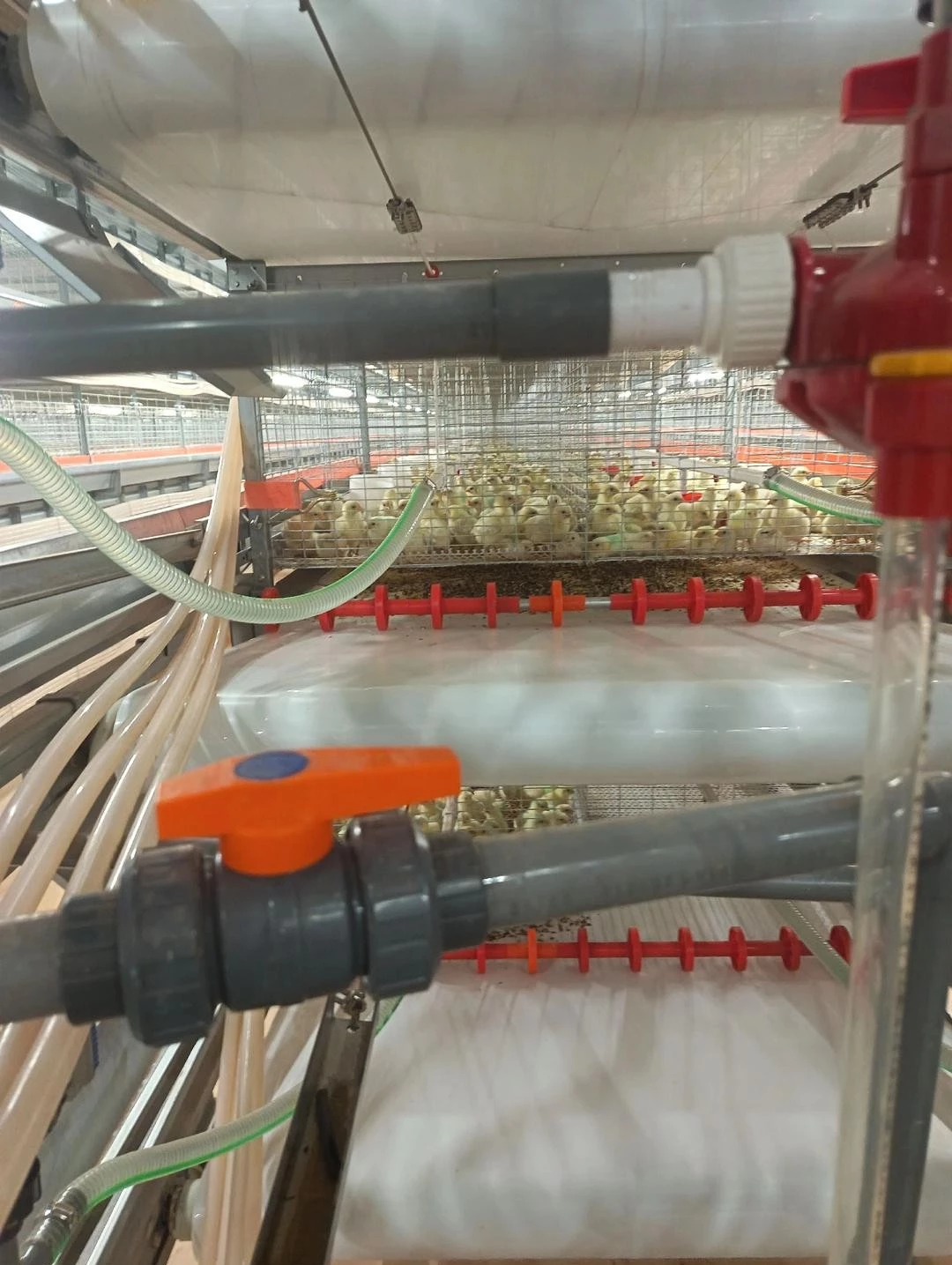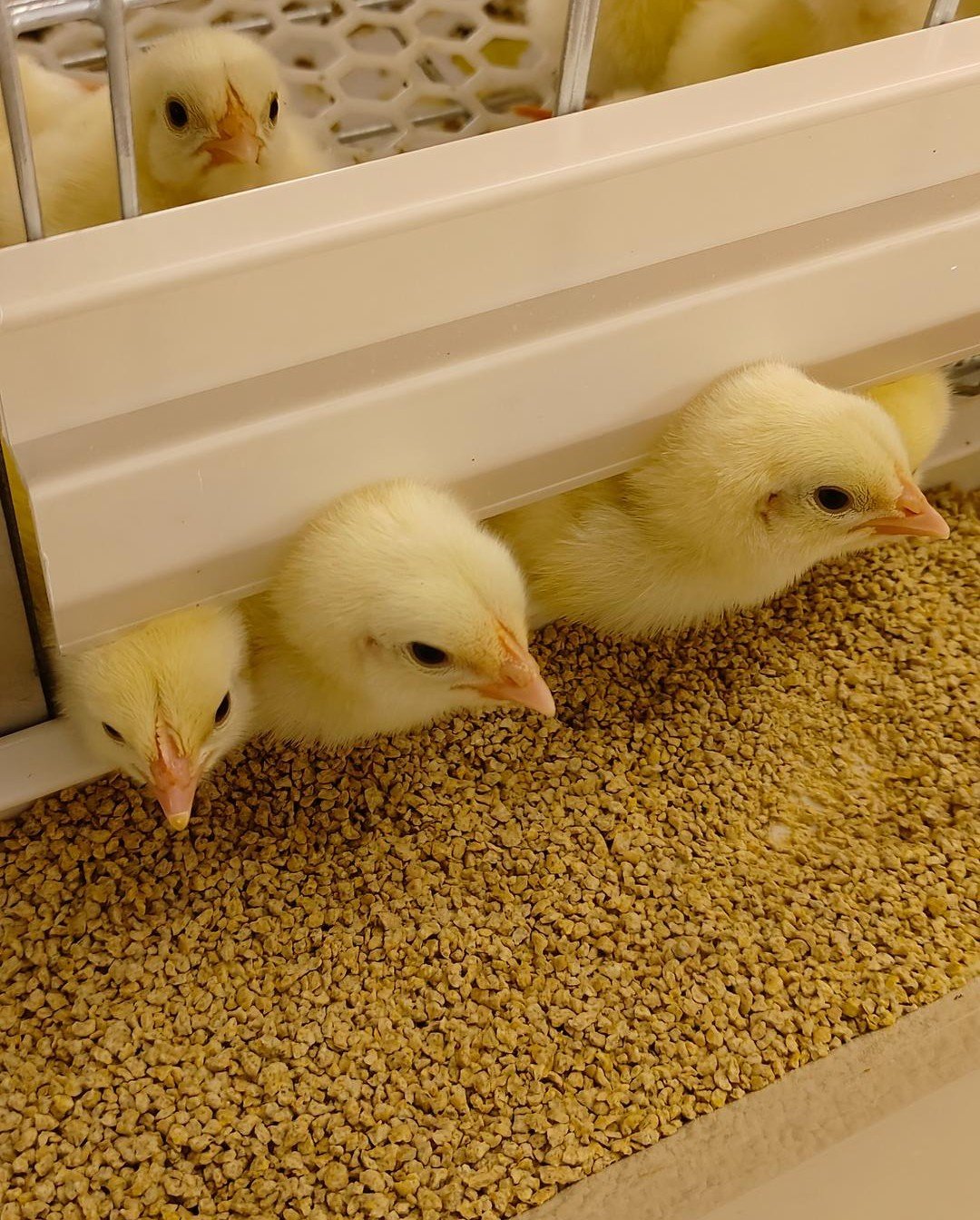

Closed Poultry Houses and Cage Battery System: The Critical Role of Ventilation
Compared to open-sided houses, closed poultry houses, particularly those utilizing cage battery system, offer significant advantages including higher land utilization efficiency, reduced labor requirements, larger single-house stocking capacity, and easier standardization of management practices. These benefits are making them increasingly popular among farmers and represent the future development trend of China’s poultry industry. Within the management of these closed houses, ventilation holds an extremely important position.
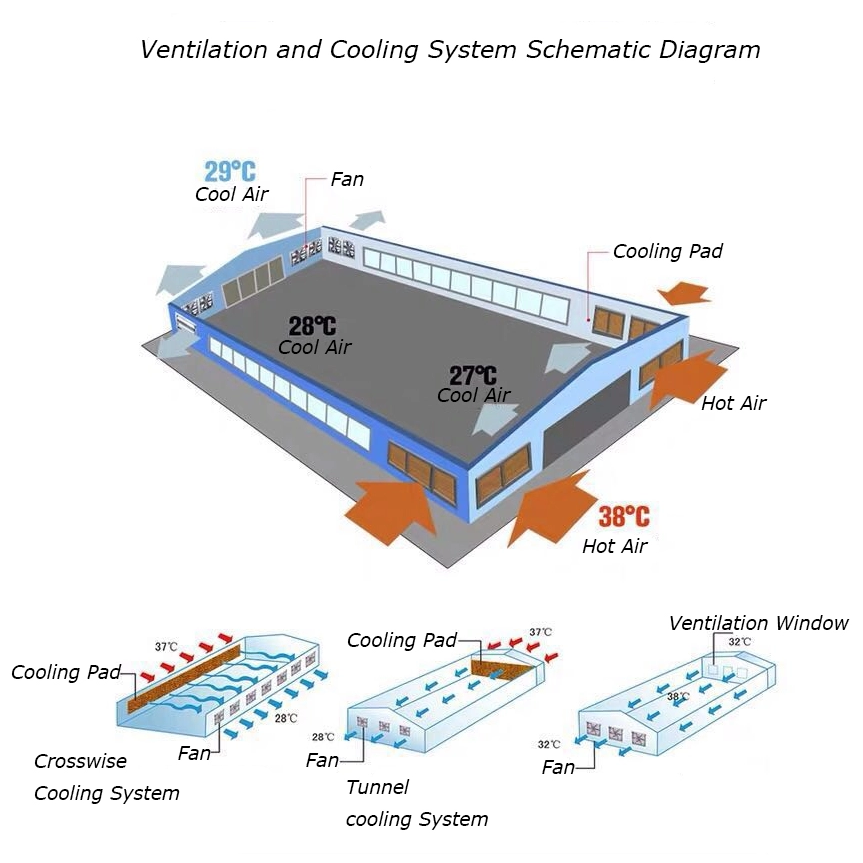
Whether a closed poultry house, especially one equipped with a cage battery system, can be ventilated scientifically tests the breeding philosophy and skill level of every farmer. When done correctly, it delivers twice the result with half the effort. However, improper use can easily lead to significant problems.
During on-site diagnosis of diseases at several farms, the author found that the predisposing causes of many diseases (such as rhinitis, Avian Influenza H9, and infectious bronchitis) were largely related to improper ventilation. Therefore, to assist in more rational ventilation practices, the fundamental essentials are introduced below.
I. Three Objectives of Environmental Control in Poultry House Ventilation
Whether for open or closed poultry houses, the fundamental purpose is to control and improve the indoor environment. Environmental control is the sole criterion for evaluating the effectiveness of a ventilation method. Three indicators are most important: temperature, air quality, and relative humidity.
- Target Temperature: 20-24°C (after 30 days of age)
- Good Air Quality: Oxygen content ≥ 19.6%; Ammonia concentration < 15 ppm; CO₂ concentration below 3000 ppm; CO concentration below 10 ppm.
- Relative Humidity: 50-70% (optimally between 55-65% for chicks and broilers)
Large-scale farms can quantify air quality using professional detection equipment, while medium and small-scale farms often rely on personnel to physically enter the house and get a “real feel” for the conditions.
While these indicators are understandable, they have a priority order. For example, the logical hierarchy for ventilation targets in winter for adult birds is: Air Quality > Relative Humidity > Target Temperature. This means ensuring fresh air exchange is the base priority, followed by maintaining humidity, and then preserving heat.
II. Four Key Points of Ventilation
Ventilation modes are fundamentally divided into Minimum Ventilation (timed exhaust to provide fresh air) and Temperature-Control Ventilation (primarily for cooling). These two modes have distinct roles.
- (A) Target (Set) Temperature: For birds after 30 days of age, the set range must be 20-24°C. It should not be changed arbitrarily, must remain relatively stable, and perceived temperature (wind chill effect) must be considered.
- (B) Timed Fans: Corresponds to Minimum Ventilation. A cycle time of 5-8 minutes is optimal, not too long.
- (C) Temperature-Control Fans: Corresponds to Temperature-Control Ventilation. When the actual house temperature exceeds 23°C, gradually increase the number of fans for cooling ventilation. When it exceeds 28°C, activate cooling pads (if available) for evaporative cooling.
- (D) Inlet Air Velocity: Inlet air volume must match exhaust fan capacity. Inlet velocity, related to negative pressure, inlet opening size, and house cross-sectional area, determines where air enters, its direction, and speed – all of which are crucial, especially in a multi-tiered cage battery system to ensure uniform air distribution across all levels.
III. Key Points and Common Misconceptions of Winter Ventilation
Broilers: Among all breeds, white-feathered broilers present the greatest ventilation challenge. Their body weight increases rapidly daily, requiring constant increases in minimum ventilation volume. Additionally, their poorer resistance means slight ventilation errors can easily lead to chilling or heat stress. Among broiler farming modes, litter-based floor rearing is the most difficult, followed by slatted floor and cage battery system. Therefore, broiler farming, especially on litter, demands the highest standards and is most challenging, particularly during the transitional periods of winter-spring and autumn-winter.

- Parameters for Winter Minimum Ventilation: Two reference parameters exist domestically: 0.6 CFM (0.0168 m³/kg body weight/minute) and a constant 0.0155 m³/kg body weight/minute. China’s higher disease challenge compared to abroad must be considered. Foreign recommendations often advocate for larger ventilation volumes to provide ample oxygen and boost performance, but in China, this high-volume approach easily risks chilling. Prioritizing disease prevention over performance gain, the focus should be on reducing infectious diseases like flu and IB. Some domestic companies apply a 50-70% discount to the recommended parameters for minimum ventilation.
- Ventilation Target Management in Transitional Seasons (Winter-Spring/Autumn-Winter): Priority is Oxygen Demand > Relative Humidity > Temperature.
- (1) Oxygen Demand: Easily met. Scholars estimate that 1/5th of the recommended minimum ventilation volume is sufficient just for oxygen. The primary goal of minimum ventilation is often to remove moisture, making relative humidity the more critical operational indicator.
- (2) Relative Humidity: An extremely important indicator in broiler management, crucial for assessing minimum ventilation efficacy, especially for floor-reared birds. It determines litter quality, influences ammonia levels, and can cause excess dust if too low or heat stress if too high combined with high temperature. Maintaining 50-70% is ideal. Artificial humidification is generally not recommended as it masks true litter conditions and disrupts ventilation assessment. If humidity is low, the correct response is to reduce minimum ventilation slightly to raise humidity, saving energy and reducing chilling risk from large temperature swings outdoors.
- (3) Temperature Target Management: Can be prioritized last. Before 30 days, temperatures can exceed the target (e.g., +5°C at noon) but must not fall below it, requiring heater use. When temperature exceeds the target due to high outside temperatures, increase fan runtime/level gradually (e.g., fans run 70% of a cycle, off 30%), but avoid running fans continuously. Limit the maximum number of fans to prevent aggressive cooling. Problems often arise not from the heat itself, but from drastic, rapid ventilation used to correct it, leading to chilling.
- Ventilation Control and Preventing Broiler “Bronchial Blockage”: High density and biosecurity challenges in China make viral diseases like H9 AI and IB severe, where “chilling” is a key predisposing factor. Avoiding this through ventilation is a primary management goal. Spring/Autumn is hardest to control, often switching between temperature-control and minimum modes daily. The challenge is balancing ventilation – too little causes heat stress and ammonia, too much causes chilling. Before 28 days in this season, temperature-control ventilation should be conservative. If relative humidity drops too low (e.g., <40%), consider slowing down or even reducing ventilation levels. Allow some temperature fluctuation; short-term heat stress is less harmful than in summer. Drastic, rapid cooling can sharply drop perceived temperature and create uneven air mixing, increasing chilling risk. Ventilation in these seasons should primarily be minimum ventilation for air exchange, supplemented cautiously with temperature-control ventilation.
- Common Ventilation Misconceptions in Broilers:
- Avoid the fundamental error of “heating while extensively ventilating,” which wastes fuel and risks chilling.
- Conservative ventilation in transitional seasons refers to temperature-control ventilation; minimum ventilation parameters can be adjusted flexibly based on flock condition.
- Avoid chronically raising the target temperature setting in controllers (e.g., by 1-2°C) as a method to reduce ventilation. This is only for minor, temporary adjustments. The target temperature should remain stable; adjust fan parameters instead if ventilation is too high.
- Avoid artificial spray humidification after 10 days of age, as it can distort humidity readings and risk causing cold stress if done improperly.
- While standardization is needed, ventilation must be flexibly adjusted based on the flock’s actual condition and external weather. The role of on-site managers is crucial for making these proactive, subtle adjustments, avoiding rigid application of rules.