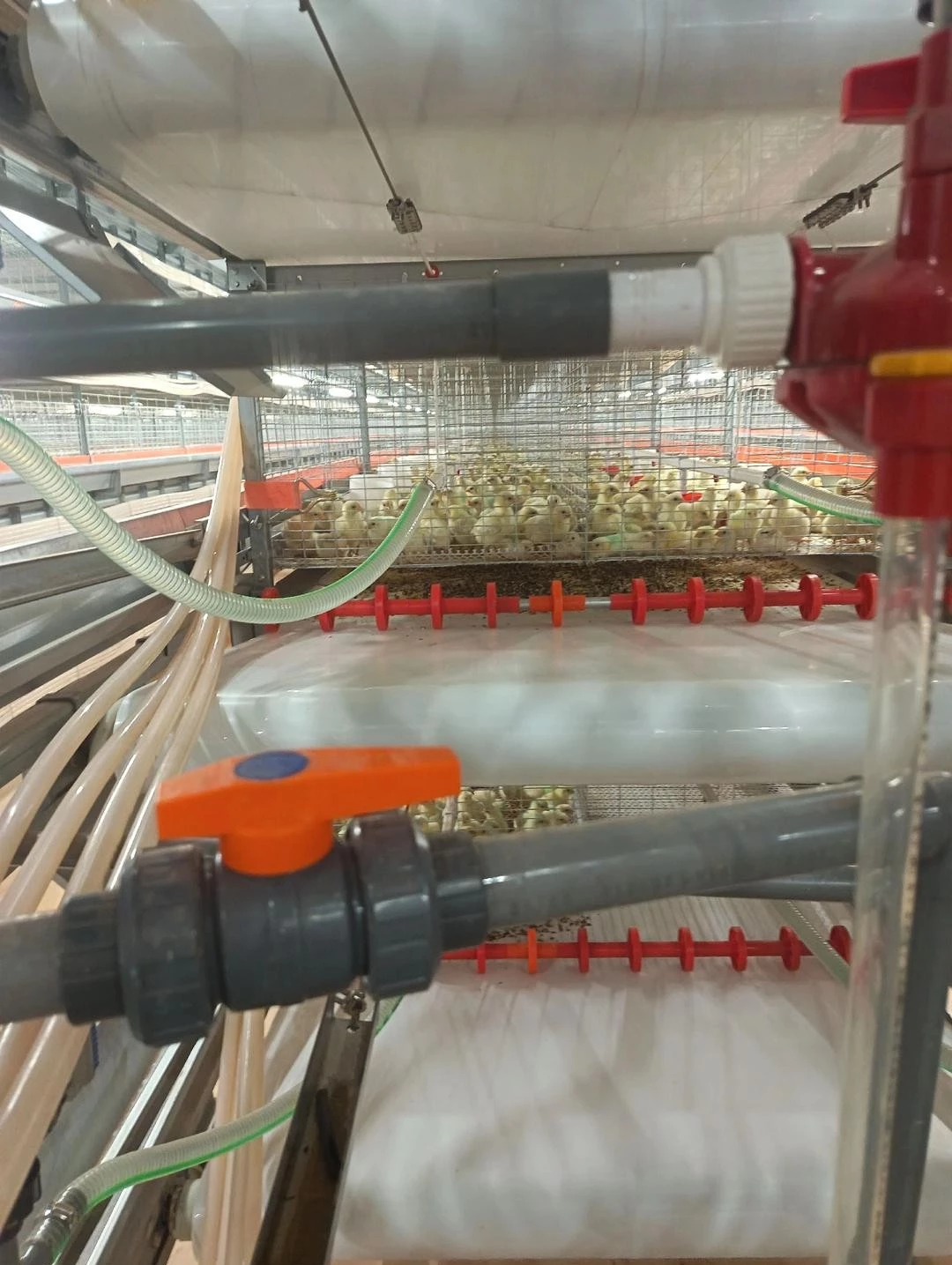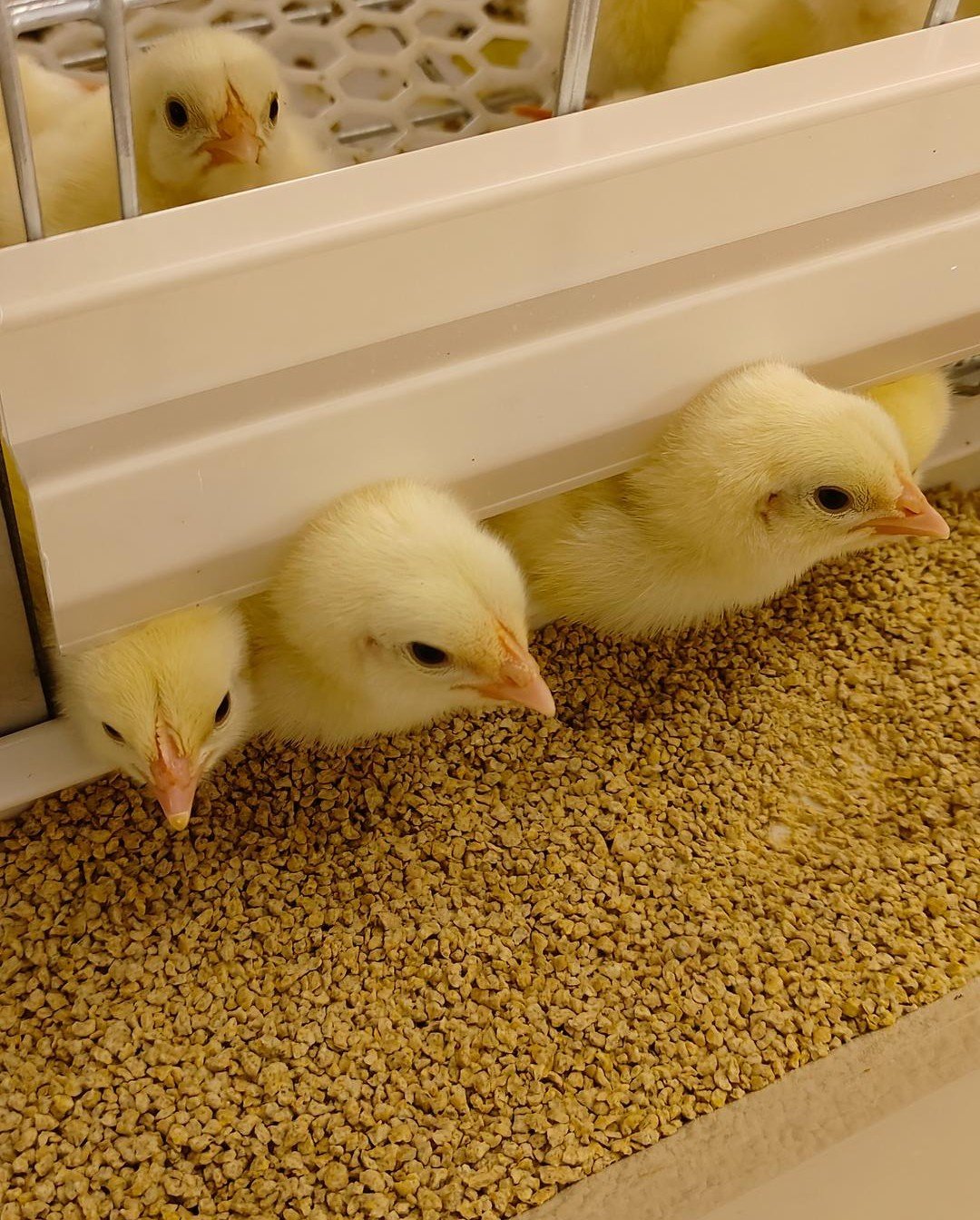

Optimizing Light Management in Battery Cages for Broilers: A Key to Growth Performance and Welfare
To enhance broiler growth performance, meticulous control of house lighting, aligned with the birds’ natural instincts, is essential. Birds perceive light differently from humans; they can see into the ultraviolet spectrum and visible light. Light influences not only physical activity but also crucially regulates metabolism and the immune system. While lighting programs in battery cage for broilers systems depend on specific local parameters, we can summarize optimal intensity and wavelength guidelines.
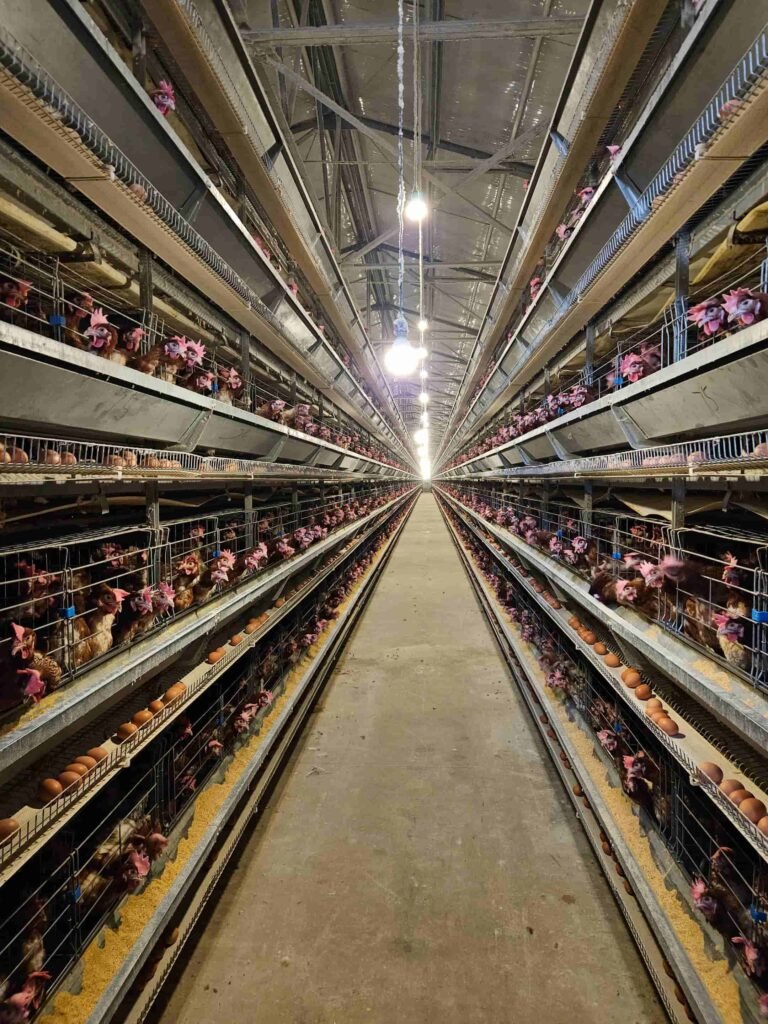
Light Intensity
Light intensity, or brightness, is vital for broiler growth and welfare. Several variables must be considered when monitoring and controlling it.
- Regulatory Differences: Intensity must comply with local regulations. For example, the EU mandates a minimum of 20 Lux throughout rearing, while other regions may require lower levels, especially in the first 7 days.
- Chick Placement: Stronger light at placement stimulates activity, helping chicks adapt and find feed/water faster. Proper stimulation in the first 5-7 days is crucial for early feed intake and digestive/immune system development in a battery cage for broilers setup.
- Gradual Reduction Post-Start: After acclimation, reducing intensity decreases activity, conserving energy for growth. A common practice is ≥20 Lux for the first 7 days, gradually reducing to 10 Lux from days 7-21, maintained until slaughter.
- Ensuring Normal Activity: Sufficient light must be maintained for normal feeding, drinking, and interaction. During inspections, intensity should be high enough to stimulate bird movement and allow proper viewing, potentially requiring a temporary whole-house increase or localized spotlights.
- Measurement & Uniformity: Measure intensity at bird level. Light should be uniform across the floor, with variations below 20% to prevent crowding in brighter areas of the battery cage for broilers system. Non-uniformity leads to uneven bird distribution.
Impacts of Incorrect Intensity
Lighting should be evaluated as a factor affecting behavior and welfare:
- Low intensity (<20 Lux) reduces foraging, preening, stretching, wing-flapping, and other normal behaviors.
- Very low intensity (≤5 Lux) significantly impairs walking ability, increases carcass bruising, and can cause eye development abnormalities.
- Chronically low light (≤1 Lux) worsens welfare, increasing footpad dermatitis and eye issues.
- Excessively high intensity increases deep footpad lesions and causes stress.
- Intensity does not directly affect skeletal health or FCR. While lower light may improve feed efficiency by reducing activity, it can also decrease intake and raise leg disorder/contact dermatitis incidence.
- For optimal performance, breast meat yield, and welfare, maintain at least 5 Lux. Levels below this increase mortality and reduce growth rate.
Bulb Maintenance
Regularly check and maintain bulbs and controls, as output degrades with time and dust accumulation.
Wavelength (Light Color)
Research on wavelength for broilers is limited and sometimes conflicting, with more focus on layers (where red light stimulates lay). The adoption of LEDs allows better control. Key considerations for battery cage for broilers:
- Evidence suggests green/blue light may improve growth performance, with birds showing a slight preference for cooler spectra.
- Blue light can mitigate stress and promote growth.
- Cool white light supports higher final body weight without negative impacts on lameness or dermatitis.
- Single-wavelength light may limit visual acuity; birds raised under blue light can be slightly more farsighted than those under white light.
- Flicker Frequency: Birds have a critical flicker fusion frequency of ~105 Hz. Ensure chosen light sources operate well above this threshold to avoid discomfort.
Conclusion
A strategic lighting program is a critical management tool in modern battery cage for broilers operations. By providing appropriate intensity (especially in early days), ensuring uniformity, considering cooler wavelengths, and maintaining equipment, producers can significantly enhance broiler welfare, health, and overall growth performance.